














Key takeaways
- Acne is a common side effect for individuals using Rinvoq, which belongs to a class of medications called Janus kinase (JAK) inhibitors.
- People taking Rinvoq for atopic dermatitis may have a higher risk of developing acne as a side effect.
- Most cases of acne caused by Rinvoq are mild to moderate and can be managed effectively with common acne treatments.
Doctors prescribe Rinvoq to treat certain inflammatory conditions in adults and some children, including:
- moderate to severe atopic dermatitis
- psoriatic arthritis
- moderate to severe ulcerative colitis
- moderate to severe Crohn’s disease
- polyarticular juvenile idiopathic arthritis
- giant cell arteritis
Rinvoq is part of a group of drugs called Janus kinase (JAK) inhibitors. Acne is a commonly reported side effect of JAK inhibitors like Rinvoq. However, it’s unclear exactly why Rinvoq and other JAK inhibitors may trigger acne.
In studies, most cases of acne caused by JAK inhibitors were mild to moderate. Treatment options such as topical creams can help reduce or manage acne caused by Rinvoq.
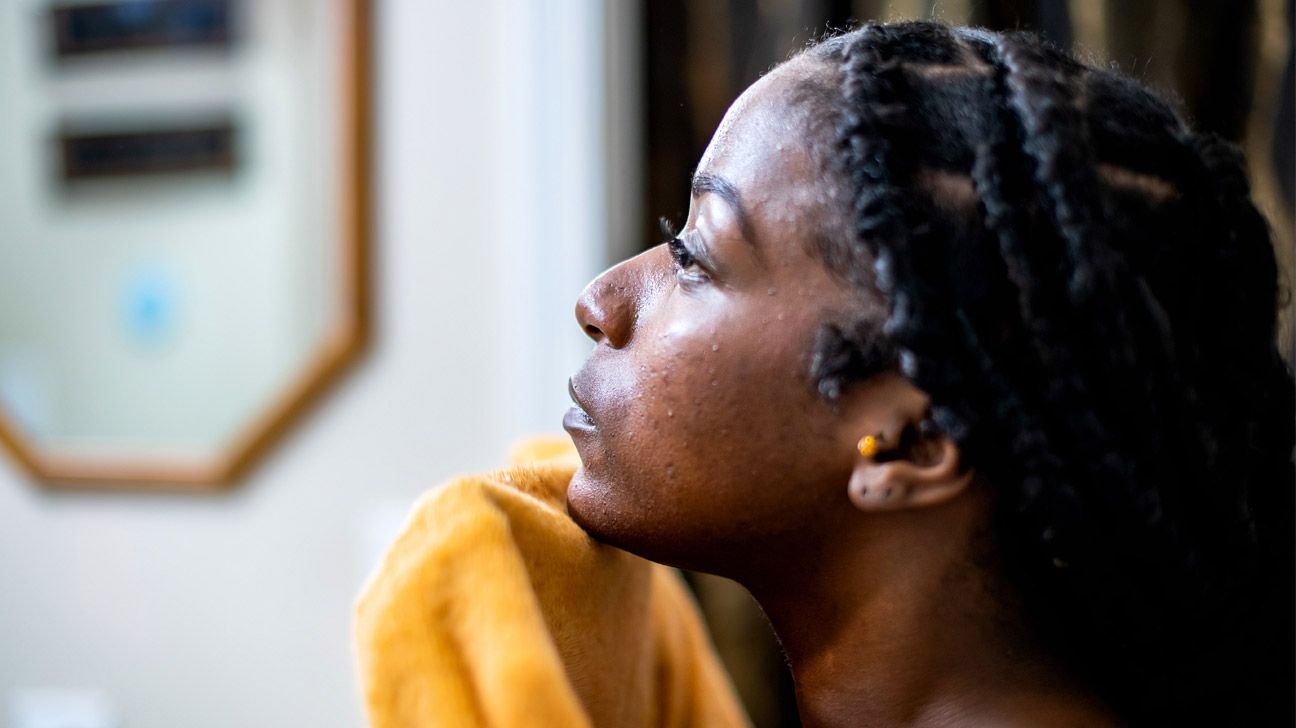
In the prescribing information for Rinvoq, acne is listed as a common side effect in people taking the medication to treat:
- rheumatoid arthritis
- psoriatic arthritis
- ankylosing spondylitis
- non-radiographic axial spondylitis
- polyarticular juvenile idiopathic arthritis
- atopic dermatitis
- ulcerative colitis
- Crohn’s disease
Acne side effects with atopic dermatitis
Acne appears to be particularly common in patients taking a JAK inhibitor like Rinvoq to treat atopic dermatitis.
A 2022 analysis of patients with moderate to severe atopic dermatitis found that acne was the most frequent side effect for those taking upadacitinib, the active ingredient in Rinvoq.
In one study of 60 such patients, more than 13% experienced acne. The average time between starting a JAK inhibitor and the onset of acne was about 7 weeks.
Researchers found that certain groups were more likely to develop acne while taking a JAK inhibitor, including:
- females
- nonwhite people
- people with a history of acne
- younger people
The use of binary terms such as “male” and “female” or “men” and “women” in this article reflects the language of the sources we’ve used. Unless otherwise noted, it’s unclear whether the research we reference included participants with expansive gender identities.
The exact connection between JAK inhibitors like Rinvoq and acne is not clear.
In the 2022 analysis, researchers cite a possible connection to the age of the person taking a medication like Rinvoq. They found that acne tends to occur more often in people taking a JAK inhibitor for atopic dermatitis (AD). AD tends to affect younger populations than other conditions treated by drugs like Rinvoq, such as rheumatoid arthritis.
Because people taking medications like Rinvoq for AD may still be within the age range to experience adult acne as its own condition, they may be more at risk of acne as a side effect of their medication.
Adult acne is also more common in women, which may make women who take JAK inhibitors like Rinvoq more likely to have acne as a side effect.
More research is needed to determine the specific link between JAK inhibitors and acne.
Most cases of acne in people taking JAK inhibitors like Rinvoq were mild to moderate, and common treatments for acne were effective in managing symptoms.
Treatment options for acne caused by Rinvoq
- topical antibiotics
- topical retinoids, such as tretinoin (Retin-A)
- benzoyl peroxide
- salicylic acid
In some cases, oral antibiotics, such as doxycycline (Monodox), may help treat acne. Other oral medications for acne include isotretinoin (Absorica), corticosteroids, or hormone therapy.
If you’re experiencing acne while taking Rinvoq, talk with your prescribing doctor or pharmacist about treatment options. Do not stop taking Rinvoq without speaking with a doctor first.
Optum Perks is owned by RVO Health. By clicking on this link, we may receive a commission. Learn more.
Acne is a common side effect of Rinvoq and other JAK inhibitors. The exact reason why Rinvoq causes acne is not clear. However, acne side effects may be more common in people taking Rinvoq for atopic dermatitis, as well as in females, younger people, or people with a history of acne.
Acne treatment may include topical or oral medications. If you have questions about acne and Rinvoq, talk with your doctor or pharmacist.
Disclaimer: Healthline has made every effort to make certain that all information is factually correct, comprehensive, and up to date. However, this article should not be used as a substitute for the knowledge and expertise of a licensed healthcare professional. You should always consult your doctor or another healthcare professional before taking any medication. The drug information contained herein is subject to change and is not intended to cover all possible uses, directions, precautions, warnings, drug interactions, allergic reactions, or adverse effects. The absence of warnings or other information for a given drug does not indicate that the drug or drug combination is safe, effective, or appropriate for all patients or all specific uses.