














Bipolar disorder is characterized by episodes of mania, hypomania, and, in some cases, depression. It can affect all areas of your body, from your appetite and energy levels to your libido.
Bipolar disorder is identified by periods of mania.
During a manic phase, you have above-average energy levels and may not sleep much. You can also experience irritability, restlessness, and an increased libido.
If you develop depression, this phase can have the opposite effects on the body. You may feel a sudden lack of energy and require more sleep, along with feeling depressed or hopeless.
Depression can also cause irritability and restlessness, as well as affect your appetite.
It’s also possible to experience a mixed state of mania and depression. You might notice symptoms from both phases.
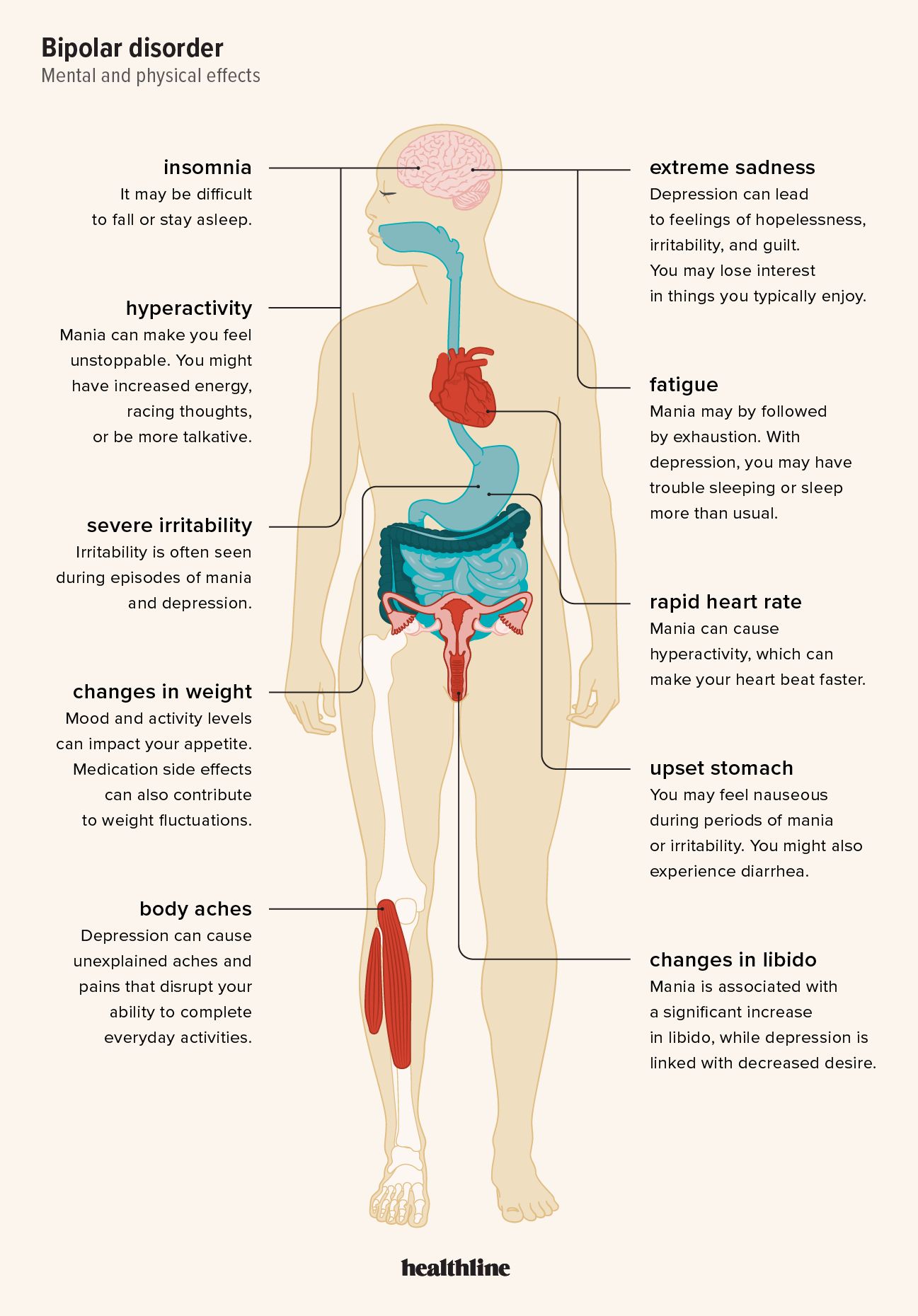
Bipolar disorder primarily affects the brain, which is part of your CNS. The CNS is made up of a series of nerves in the brain and spine that control different bodily processes.
Common effects include:
- anhedonia (decreased interest in activities you typically enjoy)
- aggression
- being easily distracted
- difficulty concentrating
- forgetfulness
- hyperactivty
- irritability
- severe sadness
Bipolar disorder can also make it difficult to concentrate. When you’re in the midst of a manic phase, you might find your mind racing and have a hard time controlling your thoughts. You may even talk faster than usual.
During a depressive episode, your mind may feel a lot slower than usual. You might feel restless and have a hard time making decisions.
Bipolar disorder can affect your ability to fall and stay asleep.
Manic phases often mean that you need very little sleep, and depressive episodes can result in sleeping more or less than usual. It’s not uncommon to have insomnia in both instances.
People with bipolar disorder are
This can increase the likelihood of cardiovascular effects, such as:
Your endocrine system consists of hormones that rely heavily on messaging signals from the brain. When these signals are disrupted, you can experience hormone fluctuations.
Bipolar disorder can cause changes to your libido. Mania may send feelings of sexual desire into overload, while depression can cause a significant decrease.
Some people experience impulsivity or decreased judgment with this disorder, which can impact what safer sex practices you implement, if any.
Bipolar disorder may also affect your weight, especially during depressive phases. With depression, you might experience a decrease in your appetite, resulting in weight loss.
It’s also possible to have the opposite experience — your appetite might increase, thereby making you gain weight.
Bipolar disorder doesn’t directly affect the bones and muscles, but if you experience depressive episodes, these can affect your skeletal and muscular systems.
Depression can lead to unexplained aches and pains, which can make everyday activities difficult to manage. You might also find it difficult to exercise due to your discomfort.
Weakness and fatigue are common and can be accompanied by sleeping too much or an inability to sleep.
Stress and anxiety related to bipolar disorder can also affect your gastrointestinal system. You may experience:
- abdominal pain
- diarrhea
- nausea
- vomiting
Such symptoms are often accompanied by feelings of panic or a sense of impending doom. You might also sweat and breathe rapidly.
Bipolar disorder can affect your performance at work or school, especially if it’s undiagnosed or untreated. It can also make it challenging to build and maintain relationships.
With treatment, many people with bipolar disorder develop fulfilling professional and personal lives. It’s important to work with a healthcare professional to receive a diagnosis and develop a care plan suited to your needs.