














The Fast Facts
- Air purifiers with HEPA filters remove airborne particles smaller than 0.3 microns.
- CADR ratings indicate how quickly an air purifier can filter air, with higher ratings meaning faster cleaning.
- The Levoit Core 400S-P Air Purifier has a lower annual energy consumption, making it a cost-efficient option for long-term use.
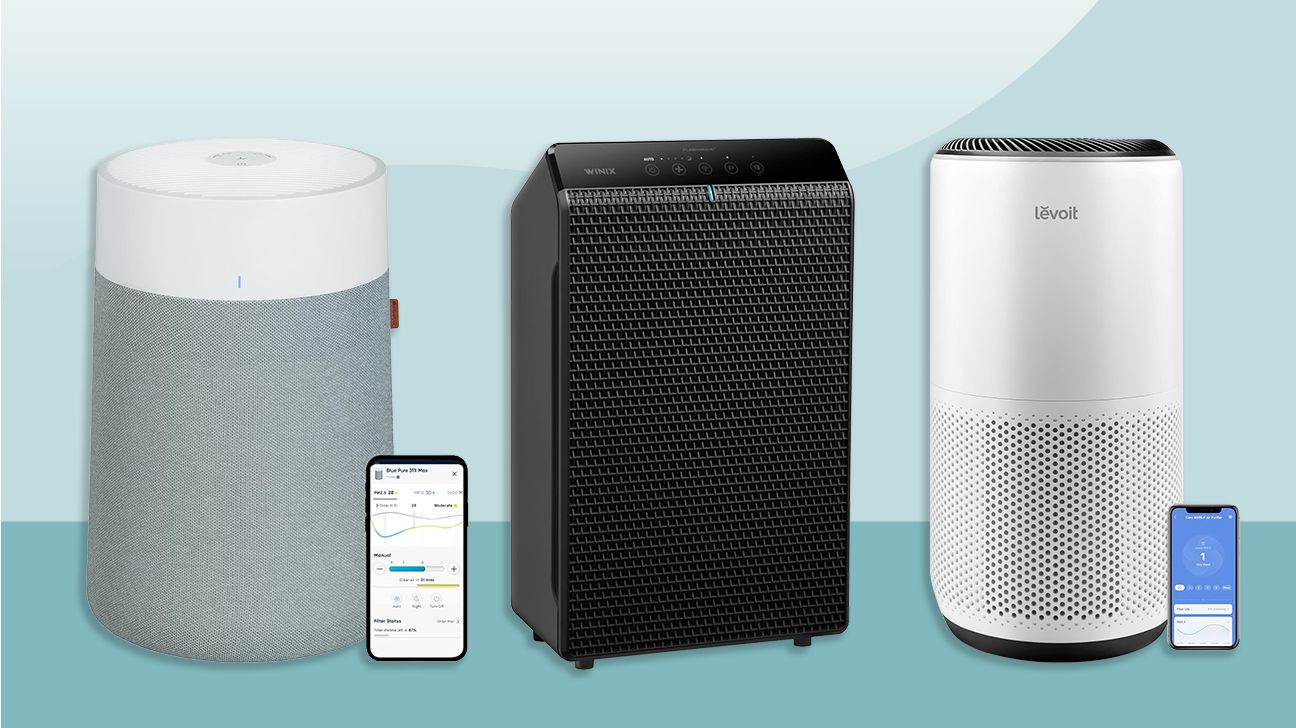
An air purifier is a great appliance to purchase if you have breathing sensitivities, allergies, or are concerned about environmental pollutants.
There are many air purifiers available for purchase, some that are portable and others that are installed in your home.
In general, the most effective air purifiers have filters that remove even the smallest particles floating in the air.
The air purifier that’s right for you really depends on your room specifications, health concerns, and personal preferences regarding style, size, and budget.
All of the air purifiers in this article have Energy Star certification and have been independently tested by AHAM. We have aimed to balance performance with recommended room size and affordability.
Get familiar with some of the most common terms you’ll see when shopping for an air purifier.
Clean air delivery rate (CADR)
CADR ratings are important indicators of an air purifier’s real-world capabilities. The Association of Home Appliance Manufacturers (AHAM) independently tests air filtration systems of all kinds and verifies brands’ claims regarding their products’ energy consumption and performance capabilities.
AHAM scores will show much filtered air a product can deliver, breaking out separate scores for its ability to clear tobacco smoke, pollen, and dust. Higher CADR ratings indicate a product can filter air more quickly.
CADR results typically indicate a unit’s capability at its highest speed and power. The AHAM room size recommendations are based on the maximum size of a room in which an air purifier can clean the air four times in 12 to 15 minutes. However, brands will often use the size of a room an air purifier can clean in 1 hour, meaning there can be large differences in recommended room size for the same product.
AHAM recommends buying air purifiers with CADR ratings equal to two-thirds of the size of your room in square feet (ft2). For example, look for a CADR of 130 if your room is 200 square feet or a 325 rating for a 500-square-foot room.
However, it’s not guaranteed that all the air in a room will pass through an air purifier. It’s also important to keep in mind that your room’s configuration may also affect its performance.
Energy Star
Energy Star collaborates with the U.S. Environmental Protection Agency (EPA) to promote energy efficiency and reduce harmful emissions and energy costs.
Although it assesses many different types of products, when it comes to air purifiers, Energy Star assesses products based on their energy efficiency and provides certificates showing CADR ratings, estimated annual energy use, CADR per Watt, the unit’s connectivity features, and more. These certificates are available for free online.
Some air purifiers will have a “Most Efficient” certification, showing that they meet Energy Star’s highest standards for energy efficiency and environmental protection.
Generally, Energy Star annual consumption estimates for air purifiers are based on 16 hours of daily use.
HEPA filters
According to the EPA, HEPA filters at least 99.97% of airborne particles smaller than 0.3 microns. HEPA filters capture particles smaller or larger than 0.3 microns even more efficiently. They are pleated filters made up of fibrous materials that catch particles as air passes through the filter.
You may sometimes see air purifiers using “HEPA-type” filters, which may not be as effective as HEPA filters and may not have been tested for efficacy. You should prioritize buying HEPA-certified products when possible.
Here’s how we narrowed down our picks for the best air purifiers:
- CADR and Energy Star ratings: We work hard to include the highest quality products from the most reputable brands possible, and our top picks only include those with official CADR and Energy Star certifications. This means all the products on this list have been independently tested and live up to the brands’ claims.
- Filtration type: The filtration type plays a big role in what your air purifier can do for you. If you’re trying to combat allergies, you’ll want a HEPA filter, which can remove particles down to 0.3 microns. If pet hair and dander are your biggest concerns, you can get away with a larger-particle filter. There are also carbon filters for odors. We included a variety of filter types on this list to help with varying needs.
- Additional features: Effective filtration is most important, but we also considered additional features that could make your life easier. We included air purifiers with app connectivity, sleep modes, timers, and auto shut-offs, to name a few.
- Price: Price is an important consideration in any recommendations we make. We have aimed to suggest the highest quality options at a reasonable price.
An air purifier is a device that helps clean your air by removing contaminants like:
- pollutants
- dust
- pollen
- pet dander
- smoke
- viruses
- bacteria
Poor indoor air quality can
According to the EPA, indoor air can be two to five (to up to 100) times more polluted than the air outdoors. Sources of that pollution include:
- cleaning products
- personal care products
- off-gassing from furniture and mattresses
- building materials
- paint
- wet or damp carpets
- central heating and cooling systems
- fuel sources, like oil, gas, coal, wood, and kerosene
- tobacco products
If you want to ensure you’re breathing the cleanest air possible, an air purifier can reduce pollutants and help provide a fresher home.
Read our tips to choosing the best air purifier for your needs.
Portable vs. permanent
Consider what you want out of your air purifier. Do you want it to work in your entire house, or is there a particular room, such as a bedroom, that needs cleaner air?
Portable air filters come in many different sizes and units.
Permanent air purifiers are generally part of your home heating, ventilation, and air conditioning (HVAC) unit and require regular filter replacement. Keep in mind that permanent air purifiers only work when the HVAC is running, so it may not run if the temperatures are mild outdoors.
Running an HVAC during mild weather to filter the air may lead to an increase in your utility bills because of the machine’s extra use.
Types of filtration
There are many types of air purifiers available for purchase, all of which filter different sizes and types of particles.
Keep in mind that pet hair is larger in size than fine particles from pollen, dust, or smoke. Your air filtration needs may be less if you’re primarily concerned with dander.
As a rule of thumb:
- Pet hair and pollen are larger particles.
- Dust is a medium-size particle.
- Smoke is considered a small particle.
In general, for allergens like pollen, dander, and smoke, you’ll want to look for high-efficiency particulate air (HEPA) filters for both portable and permanent air purifiers. This type of filter traps large, medium, and small particles floating in the air.
Carbon filters target gases. They may be useful for filtering smoke and other contaminants in the air.
Many air purifiers contain both HEPA and carbon air filters.
Size matters
If you choose to purchase a portable air purifier, know the size of your room. Air purifiers are only effective for certain sizes of space, so closely read the packaging to make sure the air purifier fits the square footage of your room.
You can find out the square feet of any room by multiplying the room’s length and width.
What does the MERV rating for HVAC air filters mean?
HVACs that filter the air are measured in MERVs (minimum efficiency reporting value).
Look for filters that are 10 or higher on this scale, no matter the particles you aim to filter. MERVs are measured from 1 to 20. You’ll need to regularly replace the filters for effective purification.
Safety
Not all air purifiers are good for your health. Using a unit or filter that’s not regularly cleaned or maintained won’t work effectively. Also consider that some air purifiers emit ozone, which can cause irritation in your lungs. These may include ionizers, uncoated or poorly coated UV lights, and plasma.
Make sure you’re keeping your living spaces free of pollutants in other ways as well, by following such steps as:
- Don’t let people smoke indoors.
- Vacuum and clean regularly.
- Ventilate with outdoor air regularly, if possible.
Questions to consider
Here are some questions to think through before purchasing an air purifier:
- Are you looking to purify the air in your whole house or just a room or two?
- What types of pollutants would you like to filter?
- What’s the size of the room where the air purifier will be?
- How willing are you to replace or clean filters?
- What size, noise, and programming features do you desire for your air purifier?
While air purifiers can have different features and types of filters, they all work similarly.
Air purifiers have a fan that sucks air into various filters, which remove particles such as dust, dander, smoke, odors, bacteria, viruses, and volatile organic compounds (VOCs) before releasing the cleaned air back into the room.
To keep your air as clean as possible, you’ll want to run the air purifier 24/7 so it can cycle the air as needed.
The best air purifiers have HEPA filters. Some also include carbon or charcoal filters to eliminate odors and UV filters to destroy pathogens like bacteria, viruses, and mold.
Yes, air purifiers can reduce indoor air pollutants like dust, pollen, pet hair, and smoke, improving overall air quality. However, how effective they are depends on the type of purifier you choose, the room size and set up you use it in, and how well you maintain it.
Air purifiers don’t replace the need to ventilate and take regular care of indoor pollutants such as cleaning mold or removing dust.R
There are some downsides to air purifiers, namely the initial cost and their upkeep. Air purifiers can be expensive, and effective models are often over $200. You will also have to factor in running costs and the cost of replacing filters. They aren’t appliances you can plug in and leave without maintaining them.
Other downsides include the risk of ozone emissions from some models and potential noisiness.
The U.S. Environmental Protection Agency (EPA) states that 50 decibels (dB) is around the operating noise of a fridge. The air purifiers on our list of top picks generally have a minimum noise level of around 30 dB. An air purifier may get up to 60 dB on its highest settings.
Using an air purifier may help control particles and pollutants in the air. There are many portable air purifiers available for purchase, all aiming to reduce the amount of smoke, dust, pet hair, and allergens in your home.
Lower-cost models tend to work in smaller rooms, whereas larger units cost more but may cover the common space in your home. If you want to consider installing an air purifier in your HVAC unit, be sure to work with a professional.