














Consider us convinced that weighted vests are the most approachable way to level up your fitness. Here’s what happened when we suited up to try out popular brands.
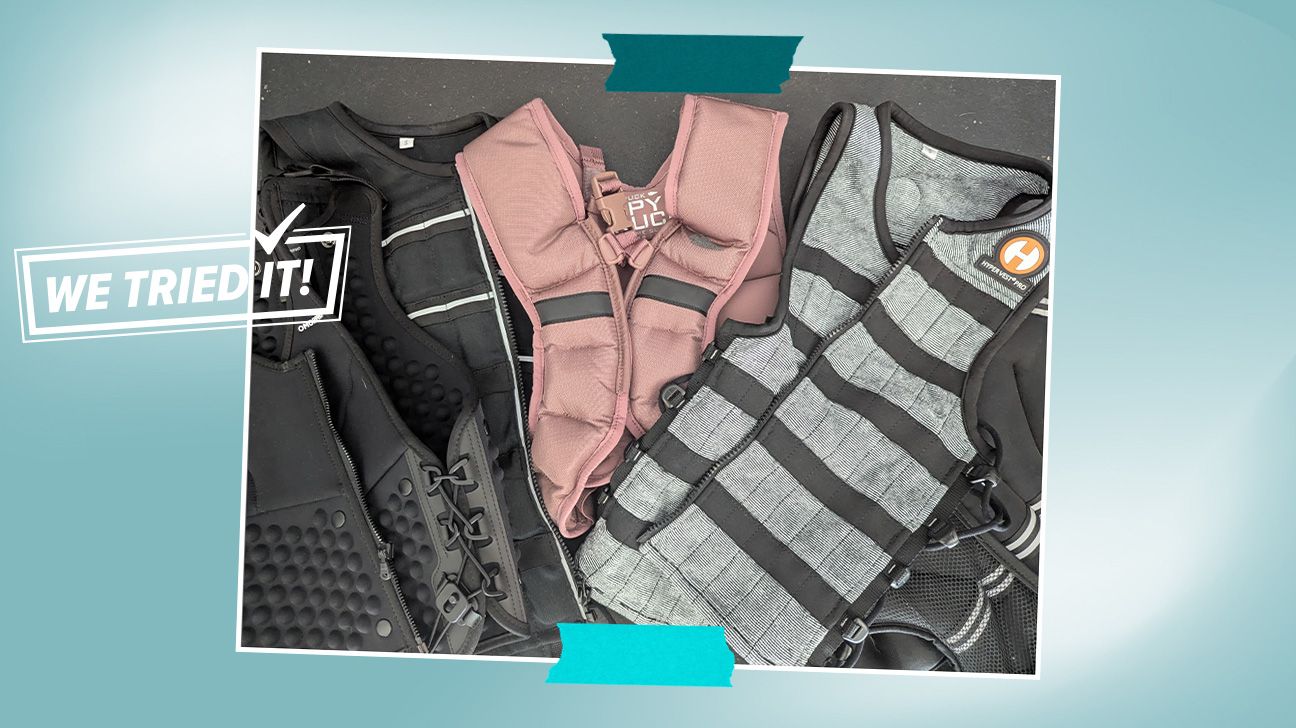
Weighted vests have always seemed rugged and intense — something first responders train with to save people from burning buildings, a tool reserved for high intensity fitness boot camps that have never quite appealed to me.
And that’s probably why I never tried a weighted vest — until now. With a goal of finally building some muscle and strength, I suited up and tested several weighted vests on and off over the last two months (nearly).
My biggest takeaway was the exact opposite of my first impression. It’s actually a very subtle, low impact way to challenge your workouts. And my fellow testers agree. So let’s break down the vests we tried.
- A stretchy, fitted weighted vest that wears like a tank top: Hyperwear Hyper Vest Pro | Skip to review
But first, does the science support the hype?
The benefits of weighted vests are still being researched and debated. But that’s not to say the trend is total nonsense.
Most experts agree that a weighted vest can help improve overall fitness, both for strength and cardio. To what extent is still a little fuzzy. And claims about weight loss and bone density are a little more blurry.
It may not be the magic bullet many talk it up to be, but it’s not nothing either. During our testing, we can confirm that it adds intensity and improves endurance.
I wasn’t alone on this testing journey. Our team tried out a very affordable, no-frills weighted vest from Amazon. We were pleasantly surprised by the fit. It doesn’t move around excessively, and it has an adjustable weight range. It checks all the boxes for trying out this trend on the cheap.
You’ll find other affordable options on Amazon, but we like that this one has an adjustable weight range and is relatively fitted for minimal bounce, courtesy of the adjustable side straps. It didn’t shift, chafe, or cause discomfort during strength sessions.
The main downside compared to popular, more expensive vests (which we get into below) is that it has a bulkier profile and has a more rugged appearance — a potential pro for some.
If you’re willing, able, and ready to invest more money in a weighted vest, here’s where we stand on the pricier options.
The perks across the board: they are slimmer, more fitted, feel like a more natural part of your workout attire, and yes, are more stylish. If these things make you more inclined to use it consistently, it’s worth the money to go all in.
Full transparency: I received the weighted vests below free for testing, but opinions are my own.
I won’t tell you it improved my posture throughout the day. I still catch myself slouching at my desk. But the extra weight hanging from my upper body did make me more aware of my posture while exercising. Both other testers agree.
“I tend to round my back occasionally, but wearing the vest made me more aware of my alignment and helped me maintain a straighter stance,” says tester Sonia Moreira.
I was more inclined to relax my shoulders so they were down and back, and more likely to catch myself slipping into slouch mode during moments of fatigue.
“The padding is well-placed, not only adding comfort but also helping me maintain better posture and form during both lifting and cardio,” says Heidi of the Apexup vest.
Another note on posture: I started with a heavier weight (slightly over 10 percent of my body weight), and it was harder to maintain and correct my posture during workouts. So, don’t feel the need to overdo it. It’s likely best to start at a moderate level and increase as you build tolerance.
According to a physical therapist…“Standing in an upright posture, with the head stacked over the shoulders and the shoulder blades down and back, reduces muscular tension in the upper back and neck.”
— Gregory Minnis, DPT
The weighted vest adds just enough of a challenge and feels more approachable than, say, taking up HIIT routines out of the blue. If you prefer low intensity workouts like walking, hiking, or low impact strength, but still want to challenge yourself, a weighted vest will accomplish this.
It can even level up your household chores. “I was surprised by how much resistance I felt in my abdomen just from performing standard movements like bending for laundry,” says tester Heidi Smith.
While some high intensity cardio and formal weightlifting should likely still be part of most people’s movement regimen, weighted vests proved to be a great tool for teasing our bodies into better endurance and strength bit by bit.
It’s not going to replace my need to strength train, but it will certainly be a tool that ups the ante during the process.
I’ve done cardio for years, but have never put much effort into becoming strong. Now, two kids later and more than a year and a half postpartum, I can feel my body telling me it’s time.
There’s been a lot of internet talk about how increasing muscle mass and bone density is the move for women as we age — something to focus on before, during, and after menopause, when your body basically attacks and diminishes muscles and bones.
I’m in my late 30s, so menopause isn’t exactly ringing my doorbell, but it feels like now is the time to start cementing better habits. A weighted vest will be part of that journey, yet I’m not expecting it to replace my need to lift a weight already.