














The Fast Facts
- Though sleep is an important factor for health, many people do not get enough sleep each night.
- Natural sleep aids, such as melatonin and magnesium may help with sleep promotion.
- Products like AGZ: Nightly Sleep Support Powder from AG1 may help induce calm, making it easier to drift off.
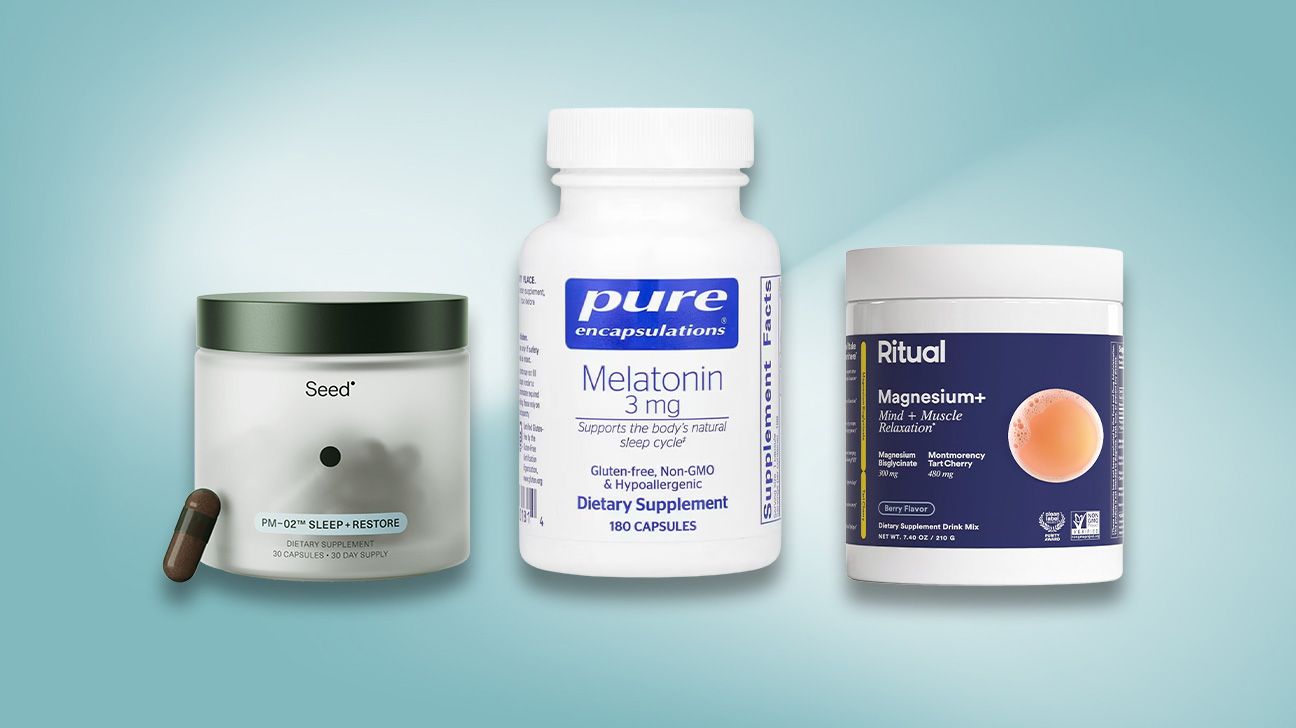
Getting good quality sleep often starts with good sleep practices and habits. However, for some people, that’s not enough. If you need a little extra help to get a good night’s sleep, consider trying one of these 10 natural sleep-promoting supplements.
Melatonin supplements have become a popular sleep aid. A
Melatonin may also improve overall sleep quality in individuals with sleep disorders. Specifically, melatonin appears to
While some other studies have not found that melatonin improves sleep, there are few such studies. Those who have observed beneficial effects generally provide participants with 3 to 10 milligrams (mg) of melatonin before bedtime.
Melatonin supplements
Menopausal and postmenopausal women have seen their sleep quality and sleep disorder symptoms improve after taking valerian, according to a 2023 study.
Another small
A 2021 study in 39 people undergoing hemodialysis found that taking 530 mg of valerian root before bed for 1 month improved sleep quality, anxiety, and depression compared with a placebo.
Nevertheless, most of the improvements observed in these trials and studies were subjective. They relied on participants’ perceptions of sleep quality rather than on objective sleep measurements, such as brain waves or heart rate.
A 2020 study found that short-term intake of valerian root appears to be safe for adults, with minor, infrequent side effects.
Magnesium may help turn down the volume on the mind and body, making it easier to fall asleep.
Studies show that magnesium’s relaxing effect may be partly due to its ability to regulate melatonin production. Magnesium is
Another review of three studies in older adults found that magnesium supplementation could help reduce the amount of time it takes to fall asleep compared to a placebo.
In another
A small study in older adults with dementia also suggests that lavender aromatherapy is effective in improving symptoms of sleep disturbance. Participants’ total sleep time increased, and fewer people woke up very early and found themselves unable to get back to sleep.
Though lavender aromatherapy is considered safe, the oral intake of lavender has been linked to nausea, belching, and diarrhea in some cases. Essential oils are intended for aromatherapy, not oral ingestion.
From Our Editors“I always find that a hot shower or bath before going to bed, lavender scented body cream on, soft lamps on in the bedroom, and lavender spray on my pillow is a good combination for falling quickly into a deep sleep!”
— Cecilia Bahou, Editor
Read more on all the historical benefits of lavender.
Quotes represent individual opinions. All content is strictly informational and should not be considered medical advice.
In a 2024 study of people with insomnia, those who took passionflower extract for 2 weeks showed significant improvements in certain sleep parameters compared with a placebo.
Those parameters were:
- total sleep time
- sleep efficiency, or the percentage of time spent sleeping as opposed to lying awake in bed
- wake time after sleep onset
Exactly how this works is unknown, but glycine — an amino acid that plays an important role in the nervous system — is thought to act in part by lowering body temperature at bedtime, signaling that it’s time to sleep.
In a
Those in the glycine group reported feeling less fatigued the next morning. They also said their liveliness, peppiness, and clearheadedness were higher the next morning.
A
Participants who took 3 g of glycine before bedtime showed improvements in objective sleep quality compared with the placebo group. Glycine supplements also helped participants fall asleep faster.
You can buy glycine in pill form or as a powder that can be diluted in water. Taking up to 0.8 g per kilogram of body weight per day appears to be safe, but more studies are needed. Many sleep study participants took only 3 g per day.
Some studies have found that CBD could relieve anxiety and act as a natural sleep aid.
For instance, one
Another
Furthermore, CBD is still classified as a controlled substance in some states, so its legality may vary depending on where you live.
There are many additional sleep-promoting supplements on the market. However, not all are supported by strong scientific research.
The following supplements may be beneficial for sleep but require more scientific investigation.
- Tryptophan: One
review of 4 studies found that taking at least 1 g of tryptophan per day could improve sleep quality and reduce the time participants spent awake in the middle of the night. - Ginkgo biloba: According to an
older study , consuming around 240 mg of ginkgo biloba 30 to 60 minutes before bed may help reduce stress, enhance relaxation, and promote sleep. Animal studies are also promising. - L-theanine: Consuming a daily supplement containing up to 200 mg of L-theanine may help improve sleep and relaxation. Animal studies suggest it may be more effective when combined with gamma-aminobutyric acid (GABA) or
magnesium .
Diphenhydramine and doxylamine succinate are other OTC sleep aids. They’re both antihistamines.
- Diphenhydramine is the active ingredient in allergy medications such as Benadryl. Its primary use is not as a sleep drug, but it causes drowsiness and has been used to promote sleep. It’s also found in ZzzQuil, Unisom SleepGels, and Unisom SleepMelts.
- Doxylamine succinate is the active ingredient in the sleep aids Unisom SleepTabs and Nyquil. Like diphenhydramine, it causes drowsiness.
Many experts recommend against diphenhydramine and doxylamine succinate, with some saying that they are potentially unsafe for certain populations, including
If you’re interested in trying these sleep aids, it’s recommended that you use them only occasionally, as more research is needed on their long-term safety and effectiveness.
However, people with respiratory conditions, high blood pressure, or heart disease should avoid both of these drugs altogether. They
Reach out to a healthcare professional before using any herbs or OTC medications for sleep, especially since there is a potential for drug interactions with medications such as blood thinners.
Also, let a doctor know if your sleep issues persist for more than 2 weeks.
Side effects associated with specific sleep aids are listed below. Some of these side effects were reported only anecdotally or in a few studies or were observed only in people who received high doses:
Melatonin : headache, nausea, dizziness- Valerian root: diarrhea, headache, nausea, heart palpitations
Magnesium : diarrhea, nausea, vomitingLavender : nausea, belching, diarrhea (when taken orally)Passionflower : dizziness and confusion on rare occasions- Glycine: soft stools and abdominal pain on rare occasions
Tryptophan : mild nausea and vomitingGinkgo biloba : mild and rare side effects such as diarrhea, headache, nausea, rash- L-theanine: no confirmed or direct side effects when taken alone; diarrhea and abdominal pain when combined
In general, people who are pregnant or nursing should speak with doctors before trying these or any other supplements. These populations should avoid most supplements, as there’s little research to confirm their safety during these life stages.
Certain natural sleep aids, such as melatonin, are effective. Other herbal supplements, such as valerian root and passionflower, have shown mixed results.
While some studies and anecdotal evidence suggest that natural sleep aids may be helpful, more research is needed to confirm this.
Natural sleep aids like those discussed in this article are generally considered safer than prescription sleep aids because they have fewer side effects.
Still, it’s important to choose a high-quality product from a reputable brand, as the Food and Drug Administration (FDA) does not regulate herbal supplements the same way it does medications.
Look for products that are tested by an independent lab for heavy metals, toxins, and contaminants to ensure safety. You may also want to consider purchasing supplements produced in third-party certified facilities.
Additionally, even natural sleep aids are intended to be a short-term solution. If you’re regularly experiencing trouble sleeping, it’s best to talk with a healthcare professional to rule out any underlying conditions.
Diphenhydramine and doxylamine succinate are antihistamines that are sold over the counter. While they’re sometimes used as sleep aids, that’s not their primary use.
There’s no strong evidence that they work well as sleep aids, and they may cause side effects.
Older adults, especially those with kidney or liver issues, should not use diphenhydramine.
It’s best to avoid taking OTC sleep aids regularly, since doing so can lead to dependence or tolerance. If you do use them, do so only occasionally and for no more than 2 weeks at a time. Be sure to talk with a healthcare professional if you’re regularly experiencing trouble sleeping.
Keep in mind that high quality sleep is just as important for overall health as eating nutritious foods and exercising regularly.
Nevertheless, many people have trouble falling asleep, wake up frequently, or do not feel rested when they wake up. This makes it challenging to maintain optimal health and well-being.
Before taking any medications, try incorporating sound sleep practices into your routine, such as keeping electronics out of your bedroom and limiting caffeine intake before bedtime.