















A few strategic cleaning habits can cut your family’s risk of getting sick during cold and flu season.
Everyone has to manage the cold and flu season. It’s unpleasant but inevitable. It’s that time of year when it feels like viruses are everywhere, and someone in your house is bound to get sick.
You can lower your risk of contracting the virus with a smart cleaning routine and avoid it from spreading. The trick isn’t always cleaning everything, but instead knowing where and when to focus your efforts.
Cold and flu viruses can live on surfaces for hours or even days. While most transmission happens when people
We’ve partnered with Lysol to bring you tips for creating daily and weekly cleaning routines.
Cold and flu viruses spread when people with the infection cough, sneeze, or talk. Those droplets land on surfaces around them, where the viruses can remain infectious for
You’re likely familiar with the public hotspots where you will find viruses, like door handles, elevator buttons, shopping carts, and other frequently touched surfaces. But at home, you’ll find most germs on light switches, remote controls, kitchen counters, and bathroom faucets.
Aside from your home’s furniture and everyday touchpoints, cellphones can be one of the
Flu viruses can survive on hard surfaces, like counters or phones, for up to 2 days. Cold viruses last even longer, sometimes up to a week on surfaces like metal and plastic. While viruses don’t last as long on fabric or paper, they can still be present.
You don’t need to sanitize your entire house every day to help prevent the transmission of colds and flu. Instead, focus on cleaning and sanitizing the places that matter most and do it consistently.
A few minutes of targeted sanitizing to stop viruses from spreading is more effective than hours of random scrubbing.
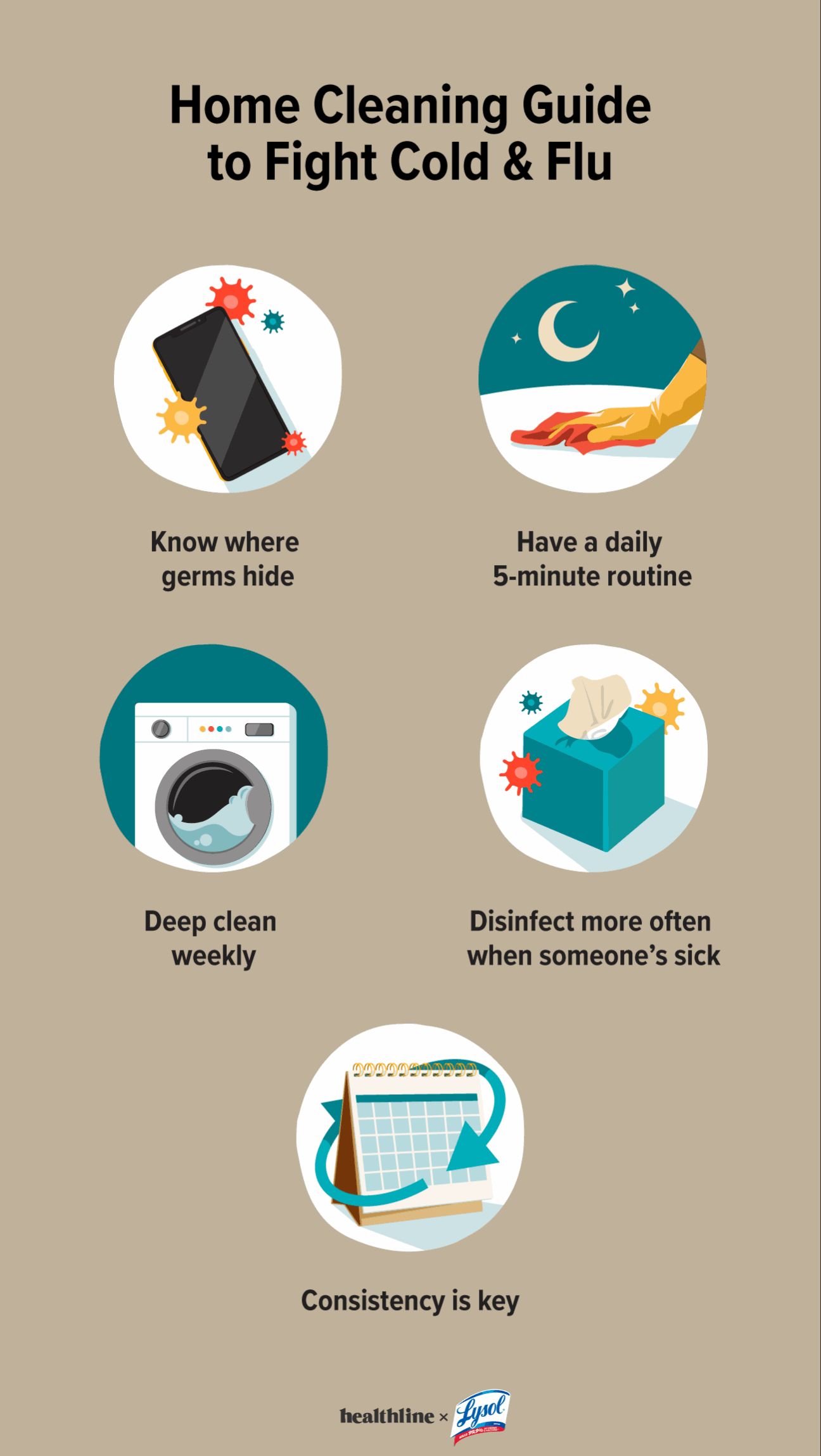
Daily 5-minute routine
Your daily routine should target the
Wipe down surfaces in the morning, such as:
- kitchen counter
- coffee maker handle
- touchpoints on faucets
- refrigerator
During the day, clean your phone screen, especially if you’ve been out in public.
Grab some disinfecting wipes in the evening or before bed and clean the main spots where germs may have collected throughout the day, such as light switches, door handles, and the TV remote. In the bathroom, give the faucet handles and toilet handle a quick wipe.
Taking just 5 minutes throughout the day to complete these small actions can make a real difference to your home’s germ load.
Weekly deep clean session
Once a week, expand your cleaning focus to areas that don’t require daily attention but are still touched regularly.
Clean and
You can even focus on your car, wiping down your steering wheel, gear shifter, and radio controls. After all, your car picks up germs from everywhere you go.
Replace kitchen sponges and
Involve the whole family
Give everyone age-appropriate cleaning tasks. Kids can wipe down their own tablets and toys. Teenagers can handle their phones and bedroom surfaces. Create a simple checklist so no one forgets their part.
When someone’s sick
When illness strikes your home, regular cleaning habits remain important. You may also want to begin germ containment and disinfection in addition to prevention.
Keep the sick person’s stuff separate as much as possible and
Change their bedding frequently, ideally every day, and
If they’re using a shared bathroom, clean and disinfect it after each use when possible. At a minimum, wipe down the toilet, sink, and shower handles.
Germ boosters
Wiping down and disinfecting surfaces is just part of the picture. These habits can further boost your protection:
- Wash your hands properly:
Handwashing is still the most important thing you can do. Wash for at least 20 seconds with soap and warm water. Do this after being in public, before eating, and after using the bathroom. - Use hand sanitizer as backup: When you can’t wash your hands, use an
alcohol-based hand sanitizer . Keep small bottles in your car, purse, and at work. - Upgrade your laundry routine:
Wash clothes and linens in the hottest water that’s safe for the fabric. If someone’s sick, add a disinfecting laundry product. - Don’t shake dirty laundry before putting it in the washer: This can spread viruses into the air.
- Time your cleaning right: Wipe down
high touch surfaces after household members come home from work, school, or errands. This removes germs they might have picked up while they were out.
Cleaning routine tip
Start high and work your way down. Dust and germs fall due to gravity. If you clean the floor first and then dust a shelf, the floor gets unclean again. Clean ceiling fans and light fixtures first, then work down to counters, and finish with floors.
You can’t prevent every case of the common cold or the flu, but smart cleaning habits can significantly reduce your family’s risk of picking up and spreading germs. The key is being consistent with high impact actions rather than trying to deep clean everything constantly.
Focus on the surfaces everyone touches most often. Make it a habit, not a chore. These small, regular actions are more effective than occasional marathon cleaning sessions.
Remember that cleaning works best alongside other prevention strategies, like getting vaccinated,