














Serosanguinous drainage refers to the clear, thin, and pale red liquid that oozes from some wounds. It’s usually a sign that your wound is healing.
Fluid that comes out of or drains from a wound is known as
There are several different types of wound drainage. They each contain
Pale red drainage or a clear liquid mixed with blood is most likely serosanguinous drainage. This type of drainage is typically not cause for concern and is a sign that your wound is healing.
On the other hand, wound drainage that is a different color may be a sign of infection. Knowing the difference between types can help you determine when to see a doctor.
Keep reading to learn more about serosanguinous drainage and the other types of wound drainage.
Understanding the components of blood
To better understand the components of exudate, or wound drainage fluid, it helps to know the various components of blood.
Your blood has four basic parts:
- Plasma: This is yellowish in color and contains serum, which is mostly water, and fibrinogens, which are proteins that help your blood to clot. Serum, which is clear, is plasma without the fibrinogens.
- Red blood cells: These bright red cells help deliver oxygen from your lungs to the rest of your body. They’re the most commonly found cells in your blood.
- White blood cells: These white cells help fight against infection.
- Platelets: These are cell fragments that rush to an artery or vein that has been injured. Platelets clump together to form a clot. The clot helps cover the wound and slow or prevent blood from leaving the wound.
There are four different types of wound drainage. These may differ in appearance, texture, and color, and indicate a different process of the healing stage.
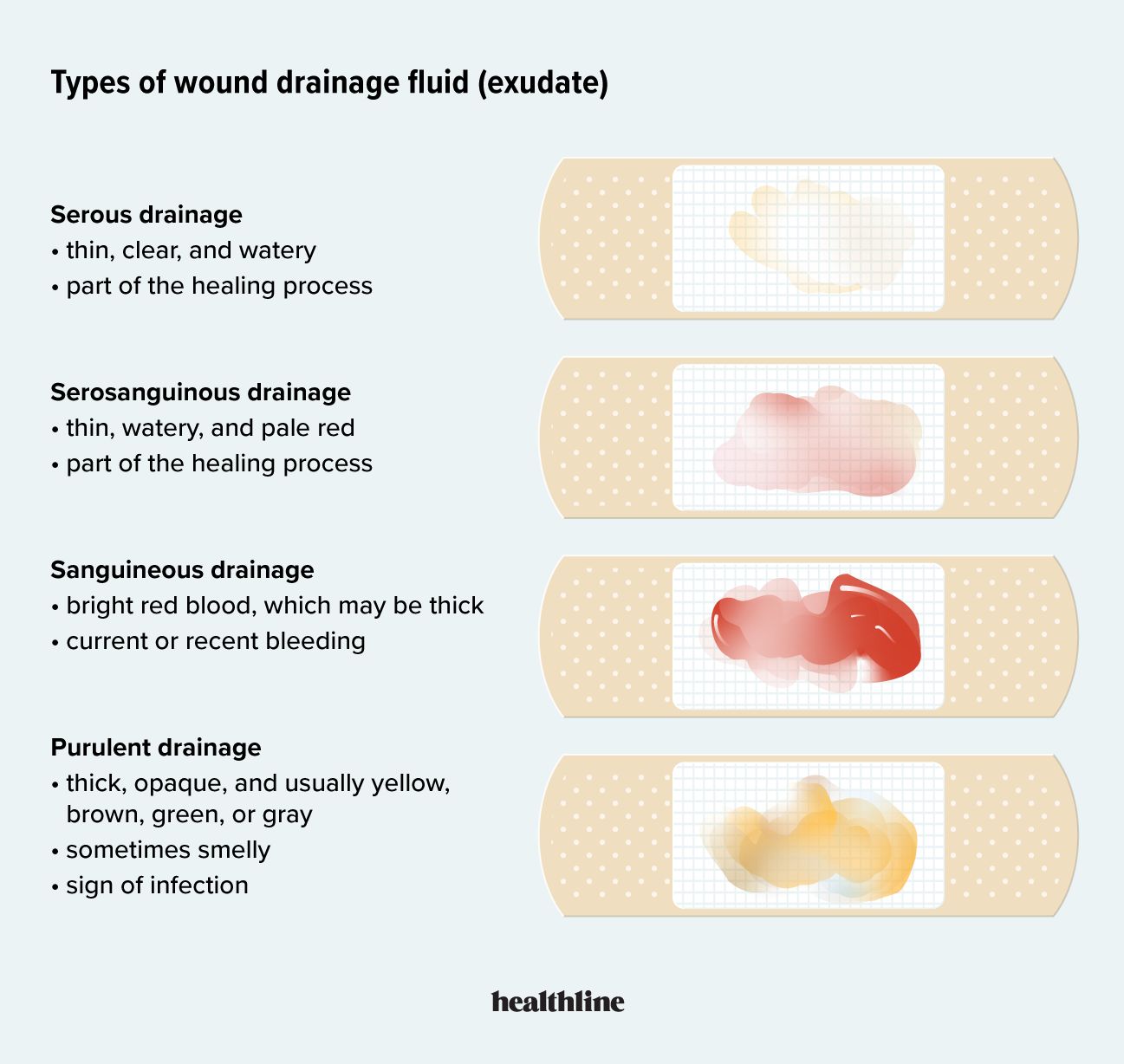
Serosanguinous drainage is thin, like water. It usually has a light red or pink tinge, though it may look clear in some cases. Its appearance depends on how much clotted red blood is mixed with serum.
The most common cause of serosanguinous drainage is a wound. There are many types of wounds, including:
Serosanguinous drainage could mean that capillaries have been damaged. These are the smallest blood vessels in your body.
Capillaries close to the skin’s surface can be easily injured when the dressing on a wound is changed. A scrape or wound with a larger surface area may be especially likely to produce serosanguinous drainage.
Serous drainage is when only plasma exudates from a wound, which may be
A small amount of serous drainage is normal. However, excessive serous fluid can be a sign of too many unhealthy bacteria on the surface of the wound.
Sanguineous drainage is characterized by
Deeper wounds involving thicker layers of tissue are more likely to produce sanguineous drainage, or thicker red blood.
If red blood is still draining after several days, it may indicate that there has been further damage to the wound. This could be because you were too active after receiving the wound or because the wound wasn’t properly treated.
In rare cases, continued sanguineous drainage may be a hemorrhage, which occurs if there’s been damage to an artery or vein. There are
- Arterial: If the blood is bright red and spurting, it may mean that an artery wall has ruptured.
- Venal: If the blood is dark red and steadily flowing, it may mean a vein has ruptured.
It’s important to practice proper first aid if you have an open wound and are bleeding.
What do if you’re bleeding
If the wound is small or shallow, applying direct pressure with a clean cloth or sterile bandage may be enough to stop the bleeding. After the bleeding has stopped, clean the wound, treat it with antibiotic cream, and cover it again.
If the wound is deep or large in surface area, you may need to see a doctor. If you’re unsure whether stitches or other serious attention is required, don’t hesitate to visit an emergency room or a walk-in clinic.
If the bleeding is spurting or cannot be managed, call your local emergency services immediately.
Purulent drainage is when the fluid has a milky texture and
The drainage is thicker because it contains microorganisms, decaying bacteria, and white blood cells that attack the site of the infection. Purulent drainage may ooze slowly and a little at a time.
It’s important to get medical attention if you experience purulent drainage, as it’s usually a symptom of infection.
Granulation tissue may also be yellow. This is the new skin that forms over a wound during the healing process. It doesn’t have a significant amount of drainage, but it may also be a
Many infections require medical treatment and, if left untreated, could lead to severe complications.
The appearance of drainage fluid is important, but it’s important to consider the amount of fluid emerging from a wound, too. Hemorrhagic drainage, for example, requires immediate medical attention.
Connect with a doctor if you experience symptoms of infection,
- skin discoloration and warmth
- swelling
- tenderness
- pain
- fever
You should also see a doctor if you experience excessive sanguineous or serous drainage in the days after an injury or a surgical incision.
A fresh wound should drain more than one that is healing properly. If you’ve had surgery, a little serous or sanguineous drainage from the incision is normal.
But excessive bleeding may indicate that a blood vessel was injured during the operation. It can also indicate that blood-thinning medications are preventing healthy blood clotting.
Get immediate medical attentionIt’s important to get immediate medical attention if you experience:
- a wound that won’t stop bleeding
- a deep wound that is spurting blood or is hard to control
- difficulty feeling or moving the area near the wound
- something stuck in the wound
Minor cuts and scrapes can usually be treated at home. If you have a wound treated professionally or undergo surgery, talk with your doctor about how to care for your wound and what to do if you notice any unusual drainage.
Serous and serosanguinous drainage are normal for the first 2 or 3 days. But you should watch for signs that the amount of blood mixed with serum is increasing. If this happens, see a doctor.
Paying close attention to a wound as it heals is vital. This may help you catch any complications early on and get the necessary treatment before further issues arise.