














This type of bacterial or fungal infection can develop due to biting, picking at the nails, injury, or trauma. You may notice a small white pimple at first, but it can lead to a swollen, painful finger. If not treated, the infection can spread to the bone and may require antibiotics or possible surgery.
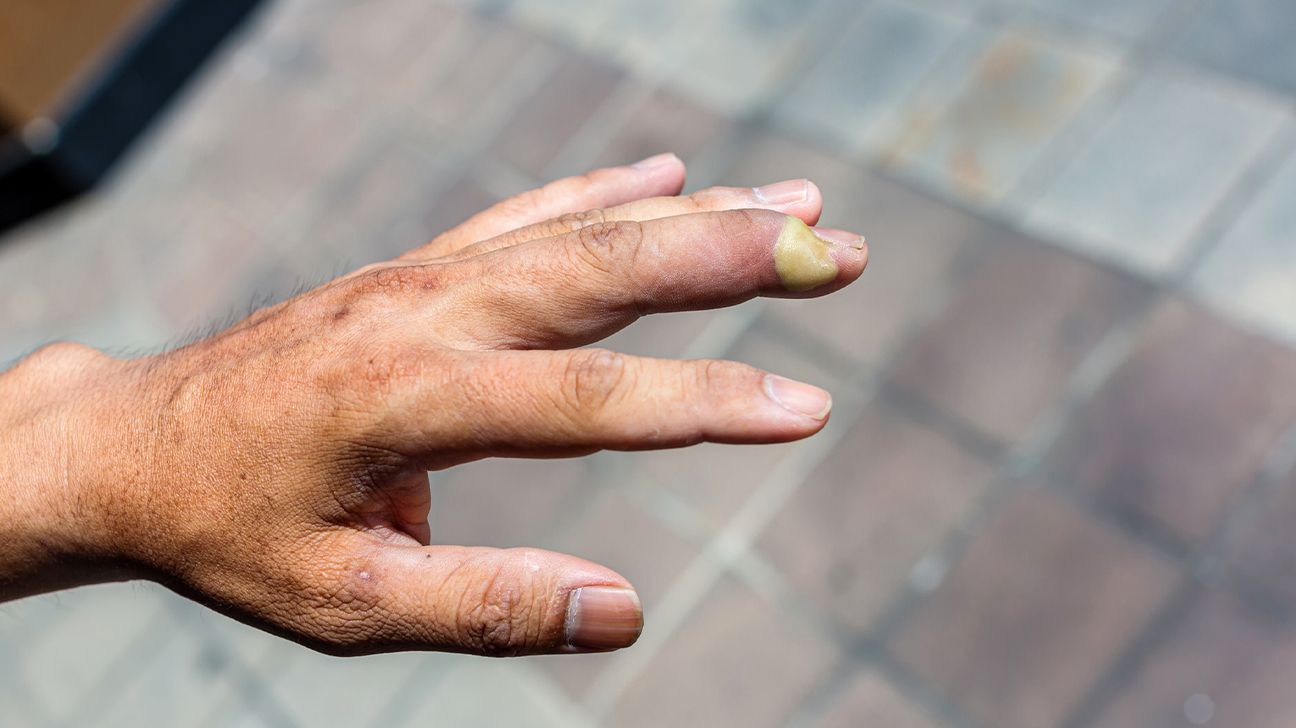
Paronychia is an infection of the skin around your fingernails and toenails.
Bacteria and fungal infections can cause this, which may appear as a small bump or whitehead pimple on the skin just below the nail. Symptoms may gradually develop and last for weeks, or they could develop suddenly and only last for a day or two.
Many people can treat paronychia at home with little or no damage to the skin or nails.
However, some may develop more severe reactions, resulting in a swollen and painful finger or toe that could lead to antibiotics, surgery, and possible removal of the nail and surrounding area if not treated.
You may notice
- a small bump or whitehead pimple on the skin around the nail
- pus-filled blisters
- redness around your nail
- skin tenderness around your nail
- changes in nail shape, color, or texture
- nail detachment
Paronychia can be either
Generally, the symptoms are similar for both paronychia types. They’re distinguished based on the onset speed and how long the infection lasts.
| Acute | Chronic |
|---|---|
| usually develops around fingernails | on fingers or toes |
| develops quickly, doesn’t last long | develops slowly, may last for weeks, often recurrs |
| often due to damage to the skin around nails, including nail biting, picking, hangnails, or other trauma | common in people who may have chronically wet skin, including bartenders, homemakers, dishwashers |
| Staphylococcus, Psuedomonas pyocyanea, and Proteus vulgaris bacteria are common infecting agents | typically caused by more than one infecting agent, often Candida yeast and bacteria growing underneath skin |
Multiple causes exist for acute and chronic paronychia, although bacteria are usually the underlying cause of each type.
Acute paronychia: A bacterial agent that’s introduced to the area around your nail by some type of trauma typically causes an acute infection. This can be from biting or picking at your nails or hangnails, being punctured by manicurist tools, pushing down your cuticles too aggressively, and other similar types of injuries.
Chronic paronychia: Candida yeast is the most common infecting agent, but it can also be bacteria. Yeasts grow well in moist environments, meaning that routine exposure to water can be a breeding ground. This might include soaking or keeping your feet or hands in water for too long. Chronic inflammation also plays a role.
In most cases, a doctor can diagnose paronychia simply by observing it.
Your doctor may send a skin sample, or possibly a sample of pus from your infection, to a lab if they want to confirm the diagnosis or if treatment isn’t working. This will determine the exact infecting agent and will allow your doctor to prescribe the best treatment.
If the skin infection becomes more severe, it may spread into the bone and turn into
For many people, home treatments may be successful in treating mild symptoms.
However, you may need different medical treatments over longer periods of time for more severe paronychia.
- Simple treatments: This could include a warm compress, soaking your fingers and hand in warm salt water, or using a topical ointment on the spot to help clear it up in a few days or so.
- Soaking: If you have a collection of pus under the skin, you can soak the infected area in warm water several times per day and dry it thoroughly afterward. The soaking will encourage the area to drain on its own.
- Drainage: A healthcare professional may use a small incision to drain any blisters or abscesses, relieve discomfort, and speed healing.
- Antibiotics: Your doctor may prescribe an antibiotic if the infection is more severe or if it is not responding to home treatments. This could include oral antibiotics, but for more severe infections it might require multiple IV antibiotic therapy if the infection spreads to the bone and doesn’t immediately respond to other treatments.
- Antifungal meds: Your doctor may prescribe an antifungal medication for chronic paronychia and advise you to keep the area dry, as well as use other methods, such as soaking your finger or hand.
- Surgery: In more severe cases where the infection spreads to your bone, you may need a medical professional to perform surgery to scrape out the infection from the bone. If that doesn’t work, you may need surgery to remove part of your nail or infected areas on your finger or toe.
Good hygiene is
Here are some simple steps you can follow:
- Keep your hands and feet clean to prevent bacteria from getting between your nails and skin.
- Avoid trauma caused by biting, picking, manicures, or pedicures.
- Wear gloves if you’re doing any outside work, including landscaping or lifting materials.
- Avoid excessive exposure to water and wet environments, keeping your hands and feet as dry as possible.
- Make sure you regularly check your nails and skin for any possible warning signs of a skin infection.
Many people who develop paronychia have mild cases with minor symptoms that may heal in a few days. However, more severe cases can lead to bone infections and may require additional medical care.
For home treatments, you might consider warm compresses, soaking in warm salt water, or using a topical ointment for any cuts, blisters, or abscesses.
If you develop more severe infections that lead to swelling or pain, you may need to contact a doctor. They might advise additional steps, and could prescribe antibiotics or other medications. Depending on how quickly and severely the infection spreads, they may also recommend surgery to treat the issue.
If mild paronychia is successfully treated, it’s unlikely to return. But if left untreated for too long, or with chronic paronychia, it could become more common and last for weeks or months, which can often be more difficult to manage.