














Key takeaways
- Medicare Supplement Insurance (Medigap) plans help cover out-of-pocket costs, such as copays, associated with Original Medicare (parts A and B). They are standardized across the country, though monthly premiums can vary based on location, company, and overall health.
- Your Medigap Open Enrollment Period starts when you’re 65 or older and have Part B coverage. Those under 65 with Medicare due to disability or ESRD may have to wait until they turn 65 to buy a Medigap policy, though some states offer policies to those under 65.
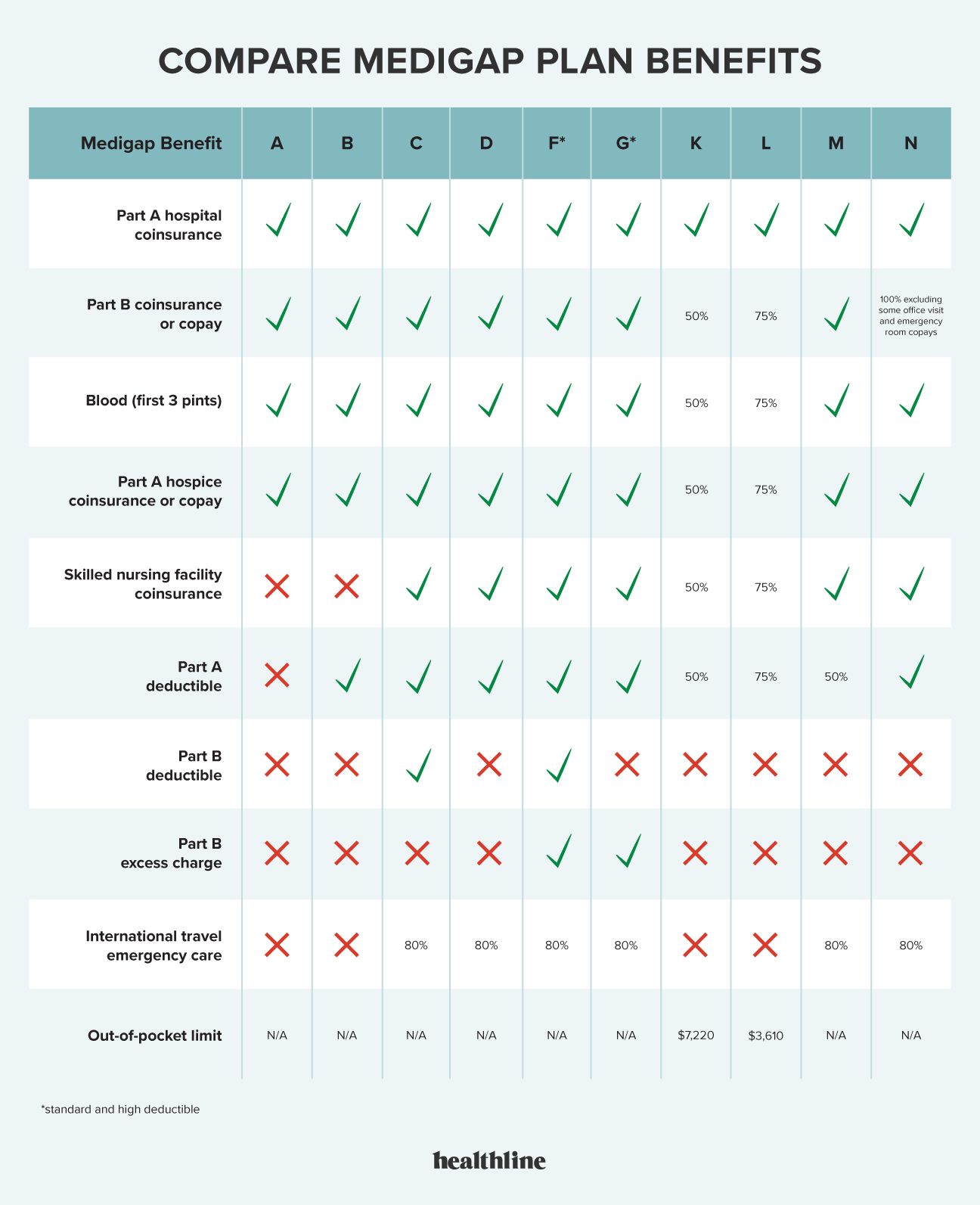
- Plan G is a comprehensive Medigap plan that covers Part A deductible, Part A coinsurance, and skilled nursing facility coinsurance, but doesn’t cover the Part B deductible.
Medicare supplement insurance (Medigap) can help cover some of the out-of-pocket costs associated with Original Medicare (parts A and B).
Each Medigap plan has a monthly premium, which covers costs that would normally be your responsibility, such as copayments for doctor’s office visits.
Medigap plans are offered by Medicare-approved private insurance companies.
Although the plans themselves are standardized, the monthly premiums may vary based on the company offering the plan, your geographic location, and your overall health.
Medigap plans typically don’t have deductibles, but some high-deductible options are available, such as Plan F and Plan G.
Most Medigap policies will also cover your coinsurance costs after you’ve met your deductible. Plan K and Plan L also have maximum out-of-pocket limits.
The Medigap Open Enrollment Period (OEP) begins the first month you have Part B coverage and are 65 years old or older.
If you’re under 65 and have Medicare because of a disability or end stage renal disease (ESRD), you might not be able to buy a Medigap policy until you turn 65.
However, in some states, insurance companies offer Medigap policies to people under 65. Contact your State Insurance Department to confirm what rights you might have under state law.
To apply, simply fill out an application directly with the company of your choice.
The right plan for you will depend on your needs and budget.
For example, if you’re planning on international travel, you can select a plan that covers foreign travel emergencies. Plans A, B, K, and L don’t offer international travel coverage, so they might not be the best choice for you.
Other considerations include:
- How much can you spend on a premium each month?
- How much do you typically spend on each covered expense?
- Do you have any upcoming surgeries or procedures that might require a hospital stay?
Which Medigap plan is the most comprehensive?
Plan F is considered to be the most comprehensive Medigap plan. However, it’s being phased out.
That said, Plan G is almost as comprehensive. It covers your Part A deductible, Part A coinsurance, and skilled nursing facility coinsurance. The only difference is that it doesn’t cover the Part B deductible.
Let’s say you were planning a total knee replacement in the coming months. During your recovery, you might need to stay in both an inpatient hospital and an inpatient skilled nursing facility. In this case, a plan like Plan G could be helpful.
You can select from 10 different Medigap plans. Each plan covers a different combination of Medicare costs that you’d typically pay out of pocket.
The plans are standardized, regardless of where you live or the company you select, but your price may vary.
Medigap companies evaluate your coverage application based on your health, sex, and age. If your health declines, you could be charged a higher rate or even denied coverage.
However, if you purchase a Medigap plan during your initial enrollment, you’re guaranteed to get a plan at the company’s best rates.