Key takeaways
- Leqembi (lecanemab-irmb) is a prescription drug that’s used to treat Alzheimer’s disease. It does not cure Alzheimer’s disease, but may help slow its progression.
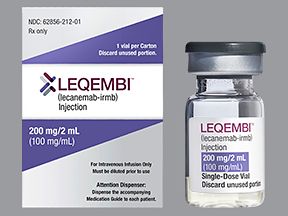
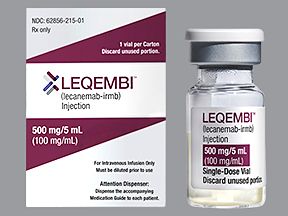
- It comes as a liquid solution that healthcare professionals administer as an intravenous (IV) infusion. It is also available as a single-dose prefilled autoinjector that is given as a subcutaneous injection under the name Leqembi Iqlik.
- Leqembi can cause infusion reactions that may be mild, such as dizziness, rash, or nausea, or serious, such as difficulty breathing, fever, or changes in blood pressure.
Leqembi is prescribed to treat Alzheimer’s disease in adults with mild cognitive impairment or mild dementia.
Leqembi is a brand-name biologic drug and contains lecanemab-irmb as the active ingredient. This medication belongs to a group of drugs called monoclonal antibodies.
Leqembi has a boxed warning. A boxed warning is the most serious warning from the Food and Drug Administration (FDA). For details, see the “Leqembi precautions” section.
Note: As a person’s condition progresses, they may need help reading or understanding certain information about their treatment plan. This article contains details that may help caregivers learn more about key aspects of Leqembi.
Key Terms
A biologic is made from living cells, while other drugs are made from chemicals.
The reason “-irmb” appears at the end of the drug’s name is to show that the drug is distinct from similar medications that may be created in the future.
Leqembi doesn’t come in a biosimilar form, which is similar to generic drugs. But unlike generics, which are made for nonbiologic drugs, biosimilars are made for biologic drugs.
Like most drugs, Leqembi may cause mild or serious side effects. Keep in mind side effects of a drug can depend on your age, other health conditions you have, and other medications you take.
A few more common side effects of Leqembi include:
Your doctor or pharmacist can tell you more about the potential side effects of Leqembi and suggest ways to reduce them. For more information, you can refer to Leqembi’s prescribing information.
Leqembi is used to treat Alzheimer’s disease in adults. The treatment is typically started when people are in the early stages of dementia.
Early stages include mild cognitive impairment and mild dementia. In these early stages, a person’s ability to remember things and think clearly slightly declines. They may get confused or repeat themselves but are still generally able to carry on with their usual daily activities.
Alzheimer’s disease occurs due to changes in the brain. One such change is the buildup of a protein called beta-amyloid. In studies, Leqembi was shown to remove this buildup in adults with mild Alzheimer’s disease. This may help delay or slow the progression (worsening) of the disease.
Whether you have health insurance or not, cost may be a factor when you’re considering Leqembi. The cost of this medication may depend on several factors, such as your treatment plan, pharmacy, or a healthcare professional administering your medication.
If you have questions about how to pay for your prescription, talk with your doctor or pharmacist. You may qualify for a savings program called Eisai Patient Support.
Find answers here to some commonly asked questions about Leqembi.
The buildup of a protein called beta-amyloid is one of the changes in the brain seen in people with Alzheimer’s disease. In studies, Leqembi was shown to reduce this buildup in adults with mild Alzheimer’s disease. Decreasing this buildup may delay or slow the progression (worsening) of dementia.
Check out this article to learn more about how Leqembi works.
No, Leqembi doesn’t cure or reverse Alzheimer’s disease. Instead, it’s used to help delay or slow the progression of the condition.
Talk with your doctor to learn more about what to expect from Leqembi treatment.
It’s unknown whether Leqembi causes any long-term side effects.
In studies of the drug, people received Leqembi treatment for up to 18 months. No long-term side effects were reported in these studies.
Leqembi was approved by the Food and Drug Administration (FDA) in 2023 and is still relatively new. Because of this, limited information is available about long-term side effects.
If you have questions about possible side effects with Leqembi, talk with your doctor.
If you’d like to explore an alternative to Leqembi, talk with your doctor. They can tell you about other medications that might work well for you. Some other drugs that treat Alzheimer’s disease include:
• certain cholinesterase inhibitors, such as: donepezil (Aricept), galantamine, or rivastigmine
• memantine (Namenda), an NMDA receptor antagonist
• donepezil/memantine (Namzaric), a combination drug
Your doctor will recommend the dosage of Leqembi that’s right for you.
Leqembi comes as a liquid solution in single-dose vials that’s given as an intravenous (IV) infusion (an injection into a vein). It is also available as a single-dose prefilled autoinjector under the name Leqembi Iqlik, which is given as a subcutaneous injection (injection under the skin).
Leqembi is usually given once every 2 weeks.
How long does a person stay on Leqembi?
If you and your doctor decide that Leqembi is safe and effective for you, you’ll likely use it long term.
The following is important information to consider and discuss with your doctor or pharmacist before receiving Leqembi.
Interactions
Leqembi may interact with several other medications. It can also interact with certain supplements as well as certain foods.
Before starting Leqembi treatment, talk with your doctor and pharmacist. Tell them about all prescription, over-the-counter, and other drugs you take. Also tell them about any vitamins, herbs, and supplements you take. Sharing this information can help you avoid potential interactions.
If you have questions about drug interactions that may affect you, talk with your doctor or pharmacist.
Pregnancy and breastfeeding
It isn’t known whether Leqembi is safe to use during pregnancy or while breastfeeding. The drug hasn’t been studied in these situations.
If you’re pregnant or breastfeeding, or if you’re planning either, talk with your doctor. They’ll discuss your treatment options.
This section describes the warnings and precautions for Leqembi.
Boxed warning
Leqembi has a boxed warning. This is a serious warning from the Food and Drug Administration (FDA) about drug effects that may be dangerous.
Leqembi may cause amyloid-related imaging abnormalities (ARIA). ARIA are changes in the brain as seen on an MRI scan. These changes can include swelling or bleeding in the brain. ARIA doesn’t usually cause symptoms, but some people may experience:
- confusion
- dizziness
- headache
- nausea
- seizures
- vision changes
In rare cases, ARIA can be life threatening and lead to death.
It isn’t known whether people with risk factors for bleeding in the brain are also at higher risk of developing ARIA from Leqembi.
What to do
Due to genetic differences, certain people may be at higher risk of ARIA than others. To determine whether you have an increased risk of ARIA, your doctor may recommend genetic testing before starting treatment with Leqembi.
Before starting Leqembi and within a week before your third, fifth, seventh, and fourteenth infusions, your doctor will make sure you have an MRI scan to check for ARIA. If you develop ARIA, your doctor may have you stop Leqembi treatment.
Talk with your doctor for more information about ARIA and Leqembi.
Other precautions
Leqembi can sometimes cause harmful effects in people with certain conditions. This is known as a drug-condition interaction. Other factors may also affect whether Leqembi is right for you.
Talk with your doctor about your health history before you take Leqembi. Be sure to tell them if any of the following factors apply to you:
- a previous allergic reaction to Leqembi
- pregnancy
- breastfeeding
Leqembi (lecanemab-irmb) is a prescription drug that’s used to treat Alzheimer’s disease. It does not cure Alzheimer’s disease, but may help slow its progression.
Infusion reactions with Leqembi can occur. They may cause mild symptoms such as dizziness, rash, or nausea, or serious symptoms, such as difficulty breathing, fever, or changes in blood pressure.
If you have questions about whether Leqembi is the right medication for you, talk with your doctor.
Disclaimer: While Healthline strives for factual, comprehensive, and current information, this article is not a substitute for a licensed healthcare professional’s expertise. Always consult a doctor before taking or discontinuing any medication. Drug information is subject to change and may not cover all uses, directions, precautions, warnings, interactions, reactions, or adverse effects. The lack of a warning does not guarantee a drug’s safety, effectiveness, or appropriateness for all patients or specific uses. Learn more about our approach to content integrity.