














Key takeaways
- Sending your child to school when they have a severe allergy can be difficult. But there are steps you can take to make sure they stay safe.
- Communication with your child’s school is an important step. The school nurse will likely help coordinate a plan for your child having an EpiPen at school.
- You can teach your child about their allergy, how to notice symptoms, and what to do if an allergic reaction happens.
More than 1 in 4 children in the United States have a seasonal allergy, eczema, or food allergy.
Allergic reactions can range from mild to severe. Symptoms of mild allergic reactions may include itching or sneezing. Some reactions can be life-threatening, such as anaphylaxis. Anaphylaxis requires immediate treatment with epinephrine, which can come in an injection form as EpiPen or EpiPen Jr.
If your child has an allergy that requires them to have an EpiPen, you may be wondering what that looks like when they are in school. Learn more about how to get an EpiPen at school and tips for talking to your child about their allergy.
Note: Besides EpiPen, there are other available emergency treatment options that contain epinephrine. If you have questions about which option is best for you, talk with your doctor.
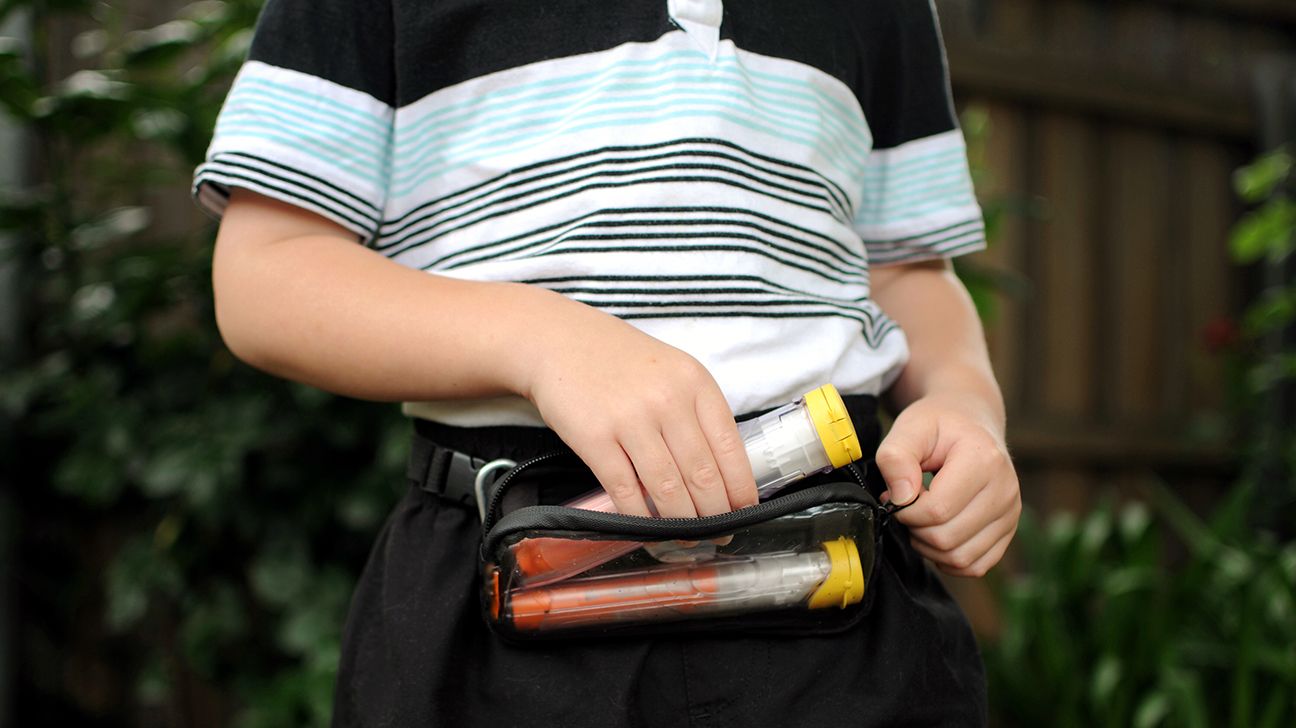
The first step to having an EpiPen at school for your child is to talk with the school, specifically the school nurse. They’re likely in charge of coordinating the people responsible for your child’s safety.
Requirements may vary depending on state or school district, but in most cases your child will have an individualized plan, also called a 504. This is a plan that you and the school develop together to allow your child to attend school safely.
You’ve likely discussed a food allergy and anaphylaxis emergency care plan with your child’s doctor or allergist. This provides specific instructions on what to do if your child has a reaction. You can use this as a blueprint to talk to the school about your child’s allergy, what a reaction looks like, and what to do.
It’s best to review the individual plan with your school every year. This is also a timely reminder to replace any expired medications that are kept at school.
If you have trouble getting an EpiPen for your child, the EpiPen 4 Schools program helps provide four free EpiPen or EpiPen Jr auto-injectors for qualifying schools.
Can your child carry an EpiPen at school?
It depends. It may depend on several factors, including:
- how old your child is
- their ability to administer the medication by themselves
- state laws
- individual school requirements
Talk with your child’s school to learn more about what your options are and create a plan that’s best for your child.
Optum Now is operated by RVO Health. By clicking on this link, we may receive a commission. Learn more.
Giving your child the information and tools they need to take care of themselves at school can help them stay safe and give you peace of mind. Here are some tips:
- Talk with your child about their allergies: If your child knows what they are allergic to, they can speak up for themselves. If they are allergic to food, you can teach them how to read food labels. This can also help them be prepared to talk with their teacher about their allergy during snack time, birthday or holiday parties, or lunch time.
- Talk with your child about what a reaction feels like: If your child has had a reaction and remembers it, talking about what it felt like can help them recognize a future episode early. Also, if they have a food allergy, it may help reinforce the need to be careful about what they eat.
- Teach them how to advocate for themselves: Help your child understand how to tell others about their allergy. For example, if they have a food allergy, they could say, “I can’t eat that; it will make me sick.” Also, encourage your child to feel comfortable asking the nearest adult for help if needed.
- Educate your child about their medications: The more your child knows about their medications, the more likely they know how to ask an adult for help if needed. When your child is old enough, you can teach them how to administer their emergency medications themselves.
- Help them understand the responsibility of carrying their own medications: If your child is able to carry their medication with them at school, teach them the importance of having the medication on them at all times. If your child is younger or unable to give themselves the medication, remind them that only an adult should open those medications.
Be sure to communicate with your child’s school about their allergies and medication needs. You will work with the school to create a plan for your child.
It may depend on several factors where your child’s EpiPen is kept and who has the responsibility of administering it.
Be sure to talk with your child about their allergies so they can advocate for themselves at school. If you have questions about your child’s allergies or plan for treatment, talk with their doctor or allergist.
Disclaimer: Healthline has made every effort to make certain that all information is factually correct, comprehensive, and up to date. However, this article should not be used as a substitute for the knowledge and expertise of a licensed healthcare professional. You should always consult your doctor or another healthcare professional before taking any medication. The drug information contained herein is subject to change and is not intended to cover all possible uses, directions, precautions, warnings, drug interactions, allergic reactions, or adverse effects. The absence of warnings or other information for a given drug does not indicate that the drug or drug combination is safe, effective, or appropriate for all patients or all specific uses.