














Moderation is key for anyone with diabetes during holidays and festivities. That remains true for people with diabetes who celebrate Jewish holidays, including Hanukkah.
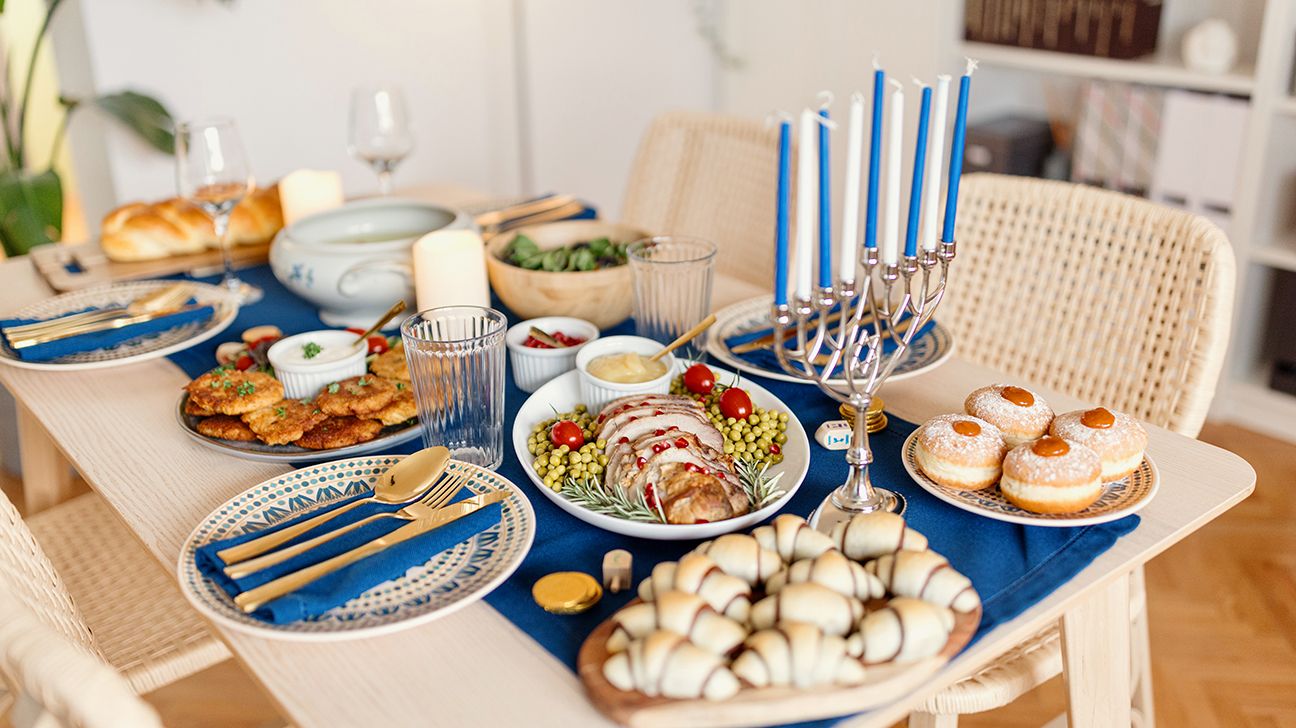
For those who live with diabetes and celebrate this holiday, Hanukkah can be a challenge when it comes to managing blood sugars and not having high or low glucose levels impacting the festivities.
For 2025, Hanukkah begins at sundown on Sunday, Dec. 14, and runs through the evening of Monday, Dec. 22.
Quick glance at Hanukkah
For those who aren’t familiar, here are some basics about this holiday.
There are at least two ways to spell the name of this holiday: Hanukkah and Chanukah. That’s because it is a Hebrew word “transliterated” into English, meaning sounded out.
The story behind Hanukkah is that a small band of Israelites was victorious over a much larger army that sought to wipe them out during Syrian-Greek rule in the 2nd century BCE. During this conflict, the oppressing army had raided and destroyed their Holy Temple in Jerusalem.
When the Jews finally reclaimed their Temple, they found the sacred lamp, called a menorah, extinguished. This lamp is supposed to provide eternal light. They found only one tiny remaining vial of olive oil needed to light the lamp, which should have only lasted a single day. Yet miraculously, the lamp continued to burn for 8 days while a messenger journeyed to another region to fetch more oil.
So began the ritual of lighting one candle per night until all eight Hanukkah candles are lit. Hanukkah always begins on the eve of the 25th of the Hebrew month of Kislev, which is why it does not always fall on the same dates in the secular month of December or earlier. It celebrates “the triumph of light over darkness.” The word itself means “dedication” — specifically, the re-dedication of the Temple.
For many people with diabetes, Hanukkah is manageable and doesn’t need to be impacted by the condition. The key is correctly measuring and calculating what you eat and drink.
In New York, Dan Fleshler says he has never considered Hanukkah a daunting holiday because of his type 1 diabetes.
“The most common traditional dish, a medium potato latke, is about 10 grams of carbs. Add in apples and sour cream, and it is 27 grams. We eat those with salad and some kind of too-fatty protein, like brisket. For me, Thanksgiving is far more challenging.”
Longtime T1D advocate Gail deVore in Colorado echoes that sentiment. Her family makes a lot of food, but while it’s easy to over-indulge, she considers Hanukkah a minor holiday in terms of managing her diabetes.
“It’s so easy to overindulge and run high. Especially with the oil from frying latkes and in the sour cream,” she said. “Measuring is not easy but having a ballpark to bolus and then keep an eye on our blood sugar will work wonders in being able to fully enjoy the 8 days of light.”
She notes that latkes are carbs and oil, plus applesauce and sour cream, so for her, it’s not difficult to carb count and treat as needed to avoid higher blood sugars.
Moderation is always key. Your diabetes management and eating habits may not be “perfect” for days that are of religious significance to you.
As long as you’re mindful of moderation and keeping an eye toward diabetes management, you can enjoy some traditional food items and practices without worrying too much — even a few bites of an authentic dish or smaller portions could work for you to balance both goals.
Generally, people with diabetes who want to balance their spiritual and religious practices to be more in line with their diabetes management plan might look to replace high carb or sweet options with more toned-down or lower-carb options.
- It is a tradition to eat foods fried in oil as a nod to the oil that lasted 8 nights. In particular, potato pancakes called latkes are traditionally eaten, topped with either apple sauce or sour cream.
- Fried foods are high in saturated fat and can increase the amount of free fatty acids in the blood. This may lead to higher blood sugars even several hours later.
Traditional foods and meals often include:
- Applesauce: A classic accompaniment to latkes, applesauce is often served to add a touch of sweetness to the oily dishes
- Babka: A rich, sweet bread with various fillings
- Cookies: Many families enjoy baking and decorating Hanukkah-themed sugar cookies during the holiday
- Dairy: In some cultures, dairy dishes are eaten to commemorate a story of bravery during a symbolic revolt
- Fritters: Depending on the region and family, other kinds of fried fritters or sweet treats like lokma may be enjoyed
- Gelt: Gold-wrapped chocolate coins given to children, often after playing the dreidel game
- Latkes: These savory potato pancakes that are fried in oil, often served with applesauce or sour cream
- Rugelach: A sweet, rolled pastry filled with nuts, chocolate, or cinnamon
- Sufganiyot: Jelly-filled doughnuts that are also fried in oil
The Joslin Diabetes Center recommends these tips for adjusting Hanukkah recipes and meal preparation. This may include:
- Substitute butter and higher-fat oils with nonstick spray to coat muffin tins, cake pans, and cookie sheets.
- Bake low-fat, lower-sugar versions of sweets, such as banana bread and oatmeal cookies.
- Use a heart-healthy oil, such as canola oil, when baking.
- Decrease the sugar and fat in recipes by 1/3 to 1/2 of the amount specified.
- Try recipes that use artificial sweeteners as part of their ingredients. However, it is not recommended that sugar in recipes be completely replaced with artificial sweeteners because some sugar is needed to provide volume, texture, and color. Try substituting half the sugar called for in a recipe with the equivalent amount of sweetener.
- Substitute sugar-free gelatin and pudding for regular gelatin and pudding in recipes that do not require baking.
- Try fruit-based fat substitutes or applesauce in place of the fat in baked goods.
Moderation is key for anyone with diabetes during holidays and festivities. That remains true for people with diabetes who celebrate Jewish holidays, including Hanukkah.
Religious leaders often encourage people to focus on their health when observing traditions and be reasonable when marking these occasions and certain practices.
Consult your healthcare team before Hanukkah for specific eating or diabetes care changes, especially how you may address any food, medication, and other lifestyle habits to meet your cultural practices.