














Key takeaways
- Myelodysplastic syndromes (MDS) are blood cancers that reduce healthy blood cell production, leading to anemia, bleeding, fatigue, and frequent infections.
- Treatments target the affected blood counts, such as red blood cell transfusions or erythropoiesis-stimulating agents for anemia, and platelet transfusions for bleeding.
- MDS can also cause serious infections, lung complications, autoimmune problems, or progression to acute myeloid leukemia (AML). Risk category, age, and overall health affect outlook.
Myelodysplastic syndromes (MDS) are a group of blood cancers that develop when bone marrow doesn’t make enough healthy blood cells. These abnormal cells often die too soon or cannot perform their functions, leading to low blood counts of working red blood cells, white blood cells, platelets, or all of the above.
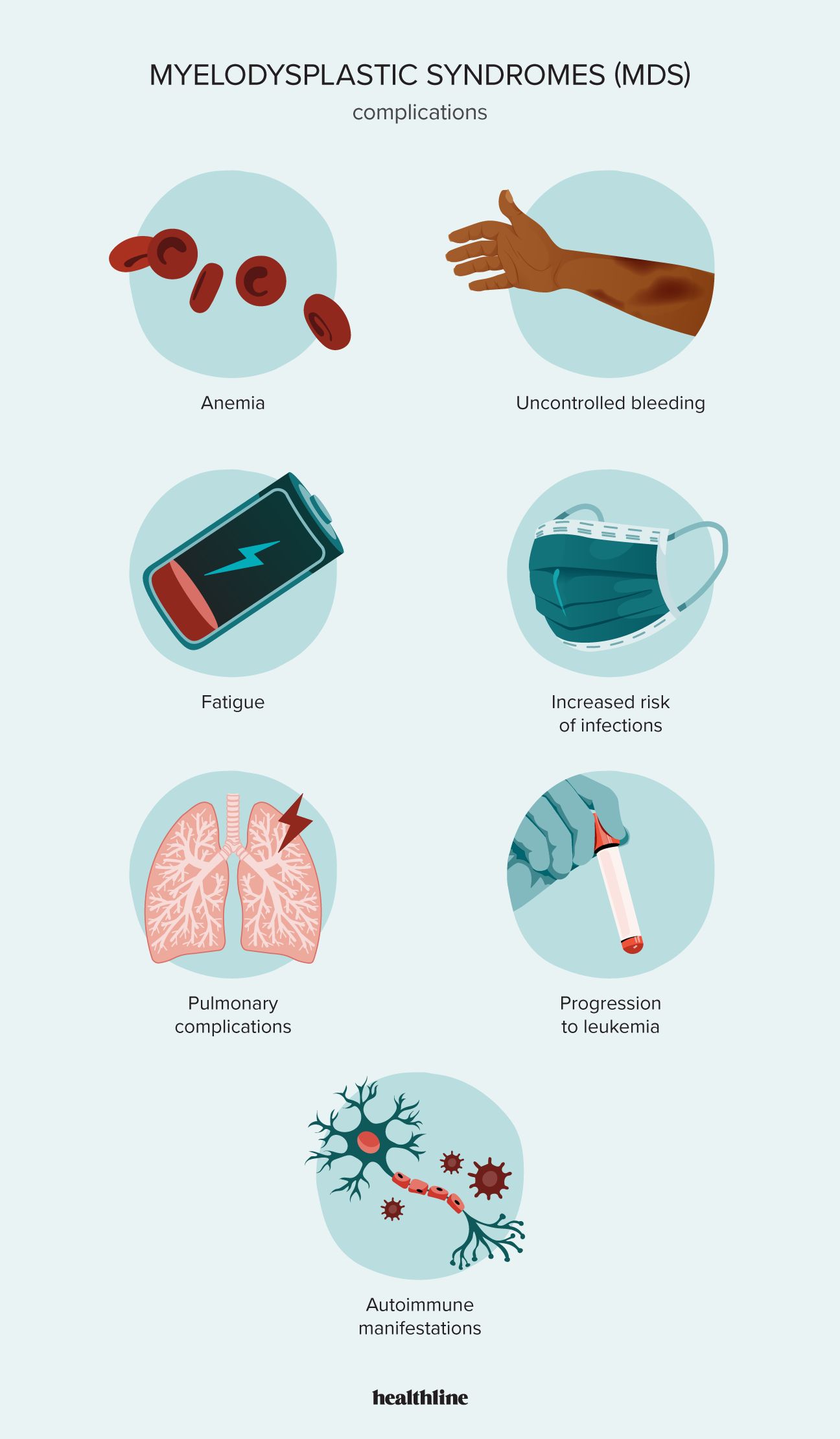
Low blood cell counts, chronic inflammation, and immune dysfunction in MDS can lead to various challenges. Symptoms of bone marrow failure, such as anemia, fatigue, bleeding, and more frequent infections, are among the
Anemia happens when you don’t have enough healthy red blood cells, the cells that carry oxygen throughout your body. The tissues in your body need oxygen to make energy.
Anemia in MDS
- fatigue
- weakness
- shortness of breath
- pale skin
Your doctor
- red blood cell transfusions
- medications called erythropoiesis-stimulating agents that help make red blood cells
- hypomethylating agents to activate genes that help blood cells mature
When MDS affects platelets, it can cause challenges with blood clotting. Platelets, also known as thrombocytes, are an important part of the body’s ability to heal blood vessels. When you get injured, platelets clump together and form a clot to stop the blood loss.
Low platelet count is called “thrombocytopenia.” It can cause uncontrolled bleeding from injuries, but it can also
- unusual, easy bruising
- red, purple, or brownish spots on your skin (purpura)
- small, flat red spots under the skin from leaking vessels (petechiae)
- nosebleeds
- excessive gum bleeding
- heavy menstrual bleeding
- blood in your urine or stool
Doctors
- platelet transfusions
- antifibrinolytic agents that help clots last longer
- platelet growth factor drugs to stimulate the bone marrow to make more platelets
Fatigue in MDS can happen for many reasons. Low red blood cell count can be a direct cause, but side effects from MDS treatments and the long-term stress of chronic inflammation can also contribute. It’s natural to feel exhausted or overwhelmed when you’re living with a serious illness.
How doctors treat fatigue in MDS depends on its underlying causes. Treating low red blood cell counts can help when fatigue is related to anemia. To help reduce the impact of other causes, your doctor may recommend:
- wakefulness-promoting medications
- energy conservation strategies,
like :- keeping important items within reach
- focusing on necessary tasks first
- resting, but not to the point of disrupting sleep
- asking for help
- managing stress
- being as active as you can
- developing healthy sleep behaviors
- eating a balanced diet and staying hydrated
- speaking with a mental health professional
The white blood cells in your body help you fight off infections and organize your immune response. Many different types of white blood cells exist, all with different roles in immunity.
Low white blood cell count in MDS is called neutropenia. When you don’t have enough functional white blood cells, your body has a harder time protecting you from bacteria and viruses.
For many people, infections in MDS are serious. A
While doctors can treat infections in MDS with antibiotics and other medications, it’s important to take steps to prevent infection.
- frequent handwashing
- daily showering or bathing
- keeping skin moisturized
- wearing protective clothing, like gloves
- cleaning and treating any wounds immediately
- brushing your teeth twice daily
- not sharing items like eating utensils or drinks
- wearing a mask in public
Pulmonary conditions affect your lungs, and in MDS, your lungs are vulnerable because they’re constantly exposed to harmful particles in the air. If your functional white blood cell count is low, pathogens in your lungs are
Infections in your lungs are only one type of pulmonary complication in MDS. Increased risk of bleeding, chronic inflammation, immune dysfunction, and treatment side effects can contribute to complications like:
- autoimmune conditions
- interstitial lung disease (conditions of inflammation and scarring)
- pleural effusion (fluid buildup between the lungs and the chest wall)
Treatment for pulmonary complications in MDS depends on the specific type of lung condition diagnosed. Some, like lung infections, may be treated with antibiotics and other medications, while others, like
MDS was once known as “smoldering leukemia” because, for about 1 in 3 people, it can lead to acute myeloid leukemia (AML), a more serious, fast-growing cancer.
AML is treated with chemotherapy, but your treatment plan might also include:
- targeted therapies
- surgery
- radiation therapy
- stem cell transplant
MDS can affect your immune system in more than one way. Not only can it reduce the number of functional white blood cells you have, but the presence of unusual blood cells also triggers an immune response from your body. This can cause your immune system to attack healthy tissue, and chronic inflammation can compound the negative effects.
When your immune system attacks healthy tissue, it’s known as an autoimmune reaction. Over time, this can lead to autoimmune diseases like:
- intestinal Behcet’s disease
- systemic sclerosis
- psoriasis vulgaris
It can also cause general autoimmune symptoms of:
- noninfectious fever
- intestinal ulcers
- interstitial pneumonitis
- painful, firm lumps in the lower legs
Doctors treat autoimmune manifestations in MDS with careful use of medications that suppress or modify the immune system and drugs that help improve bone marrow function.
The outlook in MDS varies widely. Your age, overall health, the type of blood cells affected, and the severity of MDS all affect your outlook.
If you’ve been diagnosed with MDS, your doctor will place you in a risk category based on your individual circumstances.
According to the
Some complications of MDS, like serious infections, pulmonary complications, and autoimmune manifestations, can negatively affect outcomes.
Myelodysplastic syndromes are a group of blood cancers that develop when your bone marrow doesn’t make enough healthy or functional blood cells. As blood counts drop in your body, complications like anemia, fatigue, and uncontrollable bleeding may occur.
Your doctor will work with you to manage complications as soon as possible. Staying in touch with your healthcare team, attending scheduled appointments, and keeping track of any changes in your physical or mental health helps your doctor manage complications as soon as possible.