
















Board-certified dermatologist Dr. Raechele Cochran Gathers offers advice on how to prevent and manage eczema flare-ups.
One of the most common habits that I see making eczema worse is over-washing. Long, hot showers and moisture-stripping soaps can weaken the delicate skin barrier, even if you’re using a soap that’s commonly thought of as ‘gentle.’ Another thing that tends to worsen eczema is inconsistent moisturizing. Some people with eczema may moisturize sometimes, but not necessarily within a few minutes of bathing, when it matters most, or as frequently as they should.
Scratching the skin without realizing it can also worsen eczema. Many people with eczema may scratch or rub while watching TV or sleeping. This type of repeated trauma can keep you in an inflammatory cycle, even if you’re doing everything else right.
Moisturize to heal the skin barrier
Regular moisturizing can help protect and repair the skin barrier. A healthier skin barrier helps reduce eczema flares by limiting dryness, itching, and other symptoms that can leave you in a cycle of discomfort.
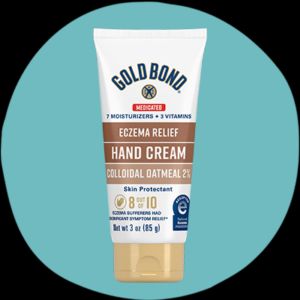
Gold Bond® Eczema Relief Medicated Skin Protectant Cream contains 2% colloidal oatmeal (the maximum strength available without a prescription*) to soothe skin and is formulated to help relieve the symptoms of eczema, including itch.**
*refers to maximum strength colloidal oatmeal available OTC
**use product as directed on the label
Yes, there is such a thing as ‘doing too much’ to your skin. Using too many products, overexfoliating, constantly switching routines, and layering several active ingredients can all overwhelm already sensitive skin.
If your skin feels tighter, or if you notice redness, stinging, or burning when you apply a product, those are all red flags. Simple and consistent routines tend to work best for eczema. Fewer products, fewer steps, and consistency usually lead to calmer skin.
That’s a great question, and these things matter more than many people realize. Stress and lack of sleep can sabotage your skin. Stress hormones increase inflammation and itch, which can trigger eczema flares, even when your skincare routine is perfect.
Poor sleep can negatively impact immune function and might make itching harder to control. Having an irregular routine, like inconsistent sleep and meal times, can disrupt the skin barrier by stressing your body’s balance. Your nervous system and the impact of stress play a significant role in how your body and skin behave.
Many internal factors influence eczema, not just the products you use or what you’re doing to your skin.
Hormonal shifts, family or job stressors, weather changes, illness, or even allergies can all trigger inflammation beneath the skin’s surface, which later shows up as eczema.
If you have eczema, your skin barrier may already be fragile, so it may take very little to trigger a flare. This can be frustrating because flares might feel random, but often, there is something happening internally that the skin is responding to.
Early signs of an eczema flare can include drier skin, itching, tightness, a rougher skin texture, increased redness, or a duller skin appearance. These can all occur before the rash appears.
At these first signs, you should try to simplify everything. Stop new products, avoid hot showers, moisturize your skin more frequently, stay well hydrated, try to reduce your stress, and aggressively protect your skin barrier.
This would also be a good time to use your prescription anti-inflammatory treatments as directed by your doctor. Catching a flare early often prevents it from becoming more severe and harder to control.
Stop chasing quick fixes and constantly switching out your skincare products. Constantly changing your skincare routine can cause a vicious cycle of flares.
Instead, start focusing on skin barrier repair. Moisturize your skin at least twice daily, cleanse gently, manage your stress, stay well hydrated, and be consistent with your skincare routine, even when your skin feels good. Calm skin comes from a steady routine.
Dr. Raechele Cochran Gathers is an ABMS board certified dermatologist and a fellow of the American Academy of Dermatology. She is passionate about health literacy, and she is the founder of MDhairmixtress.com, a health and wellness website focusing on skin, hair, and wellness.