Key takeaways
- Humira (adalimumab) is a brand-name biologic drug that’s used to treat several inflammatory conditions, including rheumatoid arthritis, plaque psoriasis, and hidradenitis suppurativa. Depending on the condition it’s prescribed to treat, it may be used in adults and children.
- Humira’s dosage will vary depending on your age, weight, and the condition you’re using it to treat. However, it’s typically injected on a weekly or biweekly basis.
- The cost of Humira can depend on several factors, including your dosage, insurance coverage, and whether you qualify for any savings programs. Humira’s manufacturer offers a copay card that may lower your out-of-pocket costs.
Humira is a brand-name prescription medication. It’s used for treating several conditions, including:
- rheumatoid arthritis (RA) in adults
- juvenile idiopathic arthritis (JIA) in children ages 2 years and older
- psoriatic arthritis (PsA) in adults
- ankylosing spondylitis (AS) in adults
- Crohn’s disease in adults as well as children ages 6 years and older
- ulcerative colitis (UC) in adults as well as children ages 5 years and older
- plaque psoriasis in adults
- hidradenitis suppurativa (HS) in adults as well as children ages 12 years and older
- certain types of uveitis in adults as well as children ages 2 years and older
Drug details
You’ll find key information about Humira here:
- Drug class: tumor necrosis factor (TNF) blockers
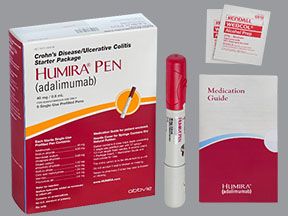
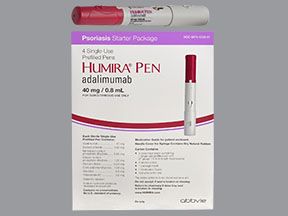
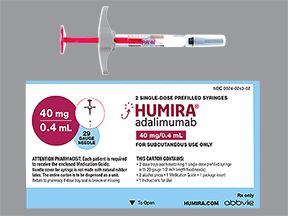
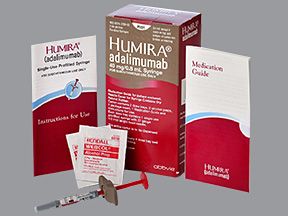
- Drug forms: liquid solution in a single-dose pen, single-dose prefilled syringe, or single-dose vial
- Biosimilars available? yes
- Prescription required? yes
- Controlled substance? no
Humira is a brand-name medication. The Food and Drug Administration (FDA) has approved several biosimilar versions of Humira: Hyrimoz, Hadlima, Amjevita, Cyltezo, Abrilada, Hulio, and Yusimry.
A biosimilar is a medication that’s similar to a brand-name drug. A generic medication, on the other hand, is an exact copy of a brand-name drug. Biosimilars are based on biologic medications, which are created from parts of living organisms. Generics are based on regular drugs made from chemicals. Biosimilars and generics also tend to cost less than brand-name medications.
The Humira dosage your doctor prescribes will depend on several factors. These include:
- the type and severity of the condition you’re using Humira to treat
- your age
- the form of Humira you take
- other medical conditions you may have
- body weight (in children)
Typically, your doctor will start you on a low dosage. Then they’ll adjust it over time to reach the amount that’s right for you. Your doctor will ultimately prescribe the smallest dosage that provides the desired effect.
The following information describes dosages that are commonly used or recommended. However, be sure to use the dosage your doctor prescribes for you. Your doctor will determine the best dosage to fit your needs.
Drug forms and strengths
Humira comes in three forms:
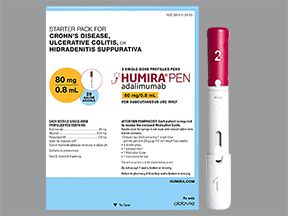
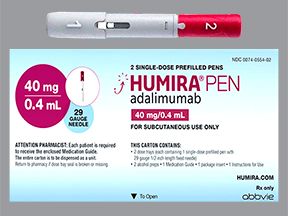
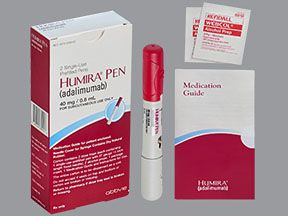
- A single-dose pen: It’s available in these strengths:
- 40 milligrams (mg)/0.4 milliliter (mL)
- 40 mg/0.8 mL
- 80 mg/0.8 mL
- A single-dose prefilled syringe: It’s available in these strengths:
- 10 mg/0.1 mL
- 10 mg/0.2 mL
- 20 mg/0.2 mL
- 20 mg/0.4 mL
- 40 mg/0.4 mL
- 40 mg/0.8 mL
- 80 mg/0.8 mL
- A single-dose vial of liquid solution: It’s available in one strength: 40 mg/0.8 mL.
Dosage for adults
Humira’s dosage for adults may vary depending on what condition the drug is treating.
Dosage for plaque psoriasis and uveitis
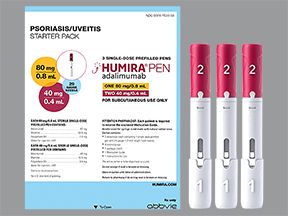
For plaque psoriasis and uveitis in adults, the recommended starting dose of Humira is 80 mg. This is followed by a dosage of 40 mg every other week, starting the week after you have your first injection.
Dosage for hidradenitis suppurativa (HS)
For HS, the recommended dosage of Humira is as follows:
- You’ll first have a loading dose of 160 mg. A loading dose is designed to get the drug into your body quickly so it can start working right away. You may receive the loading dose as a single dose in 1 day or split over 2 consecutive days.
- Two weeks later (day 15), you’ll have a dose of 80 mg.
- Two weeks later (day 29), you’ll start having a 40-mg injection each week or 80 mg every other week.
To help you follow the dosing schedule described above, Humira comes in a starter kit that contains several prefilled pens or syringes. This kit helps make sure you use the correct pen dosage during your first month of taking Humira.
Dosage for rheumatoid arthritis, psoriatic arthritis, and ankylosing spondylitis
Humira’s dose is the same for rheumatoid arthritis (RA), psoriatic arthritis (PsA), and ankylosing spondylitis (AS).
The recommended dosage of Humira for these conditions is 40 mg every other week.
Humira may be prescribed in combination with methotrexate (Trexall) for RA. If you’re using Humira alone for RA, your doctor may increase your dosage to 40 mg every week or 80 mg every other week.
Dosage for ulcerative colitis and Crohn’s disease
For ulcerative colitis and Crohn’s disease, the recommended dosage of Humira is as follows:
- You’ll first have a loading dose of 160 mg. You may receive this as a single dose on one day or split over two consecutive days.
- Two weeks later (day 15), you’ll have a dose of 80 mg.
- Two weeks later (day 29), you’ll start having a 40-mg injection every other week.
Pediatric dosage
Humira is approved to treat the following conditions in certain children:
- hidradenitis suppurativa
- ulcerative colitis
- Crohn’s disease
- uveitis
- juvenile idopathic arthritis
The dosing is based on the child’s condition and body weight.
For details about your child’s specific dosage, talk with their doctor. You can also refer to this Humira dosing article for detailed information on Humira’s dosage for children.
How to inject Humira
Humira is given as a subcutaneous injection. You may be able to give yourself Humira injections at home. If so, your doctor or pharmacist will first show you how to use the medication. However, some people may still need to visit their doctor’s office for the injections.
You can give yourself Humira injections in your belly or the front of your thigh. Be sure to inject the drug directly into your skin. Don’t try to inject Humira through your clothing.
And be sure to choose a different spot on your body each time you give yourself an injection. This new site should be at least 1 inch away from the last area you used. This helps prevent your skin from becoming too sensitive and reduces the risk of pain and other injection site reactions. Don’t inject Humira in a spot where your skin is discolored, bruised, tender, or hard.
For step-by-step instructions on how to inject Humira, be sure to talk with your doctor.
What if I miss a dose?
If you forget a dose of Humira, take your next dose as soon as you remember. Then, you should take your next dose at the regular time to put you back on schedule. If you receive Humira at your doctor’s office, call the office right away to reschedule your missed dose.
If you aren’t sure what to do after missing a dose of Humira, talk with your doctor.
To help make sure that you don’t miss a dose, try using a medication reminder. This can include setting an alarm or using a timer. You could also download a reminder app on your phone.
Will I need to use this drug long term?
Humira is meant to be used as a long-term treatment. If you and your doctor determine that Humira is safe and effective for you, you’ll likely take it long term.
Humira overdose
If you think you’ve taken or received too much of this drug, call your doctor. You can also call America’s Poison Centers at 800-222-1222 or use their online tool. But if your symptoms are severe, call 911 or go to the nearest emergency room right away.
Humira can cause mild or serious side effects. The following lists contain some of Humira’s side effects that have been reported in clinical studies. These lists don’t include all possible side effects.
In studies, side effects in children who received Humira were similar to those seen in adults, regardless of the condition Humira was used to treat.
For more information on the possible side effects of Humira, talk with your doctor or pharmacist. They can give you tips on how to deal with any side effects that may be bothersome.
Note: After the Food and Drug Administration (FDA) approves a drug, it tracks and reviews side effects of the medication. Sharing your experience helps make medications safer for everyone by giving doctors and researchers more information about how the drug works in real life. If you develop a side effect while using Humira and want to tell the FDA about it, visit MedWatch or call 800-FDA-1088.
Mild side effects
Mild side effects of Humira can include:
- injection site reactions (itching, pain, or swelling near the injection spot)
- upper respiratory infections, such as the common cold
- headache
- rash
Most of these side effects may go away within a few days or a couple of weeks. But if they become more severe or don’t go away, talk with your doctor or pharmacist.
Serious side effects
Call your doctor right away if you have serious side effects. Call 911 if your symptoms feel life threatening or if you think you’re having a medical emergency.
Serious side effects and their symptoms can include:
- heart failure
- lupus-like syndrome (an immune system reaction)
- Nerve disorders or demyelinating diseases, such as seizures or multiple sclerosis (MS)
- blood disorders, such as anemia (low level of red blood cells)
- liver damage
- boxed warning: risk of cancer, such as lymphoma (cancer of the white blood cells)
- boxed warning: risk of serious infections, such as tuberculosis (TB) or pneumonia
For more information about Humira’s boxed warnings, see the “Boxed warnings” section at the top of this article.
Allergic reaction
For some people, Humira can cause an allergic reaction.
This includes allergic reactions to latex or rubber, which are included in some forms of the Humira injection.
In general, symptoms of an allergic reaction can be mild or serious.
Ways to manage
For mild allergic reaction symptoms, such as a mild rash, call your doctor right away. They may recommend treatments to help manage your symptoms. They’ll also let you know whether you should keep taking the medication.
For severe allergic reaction symptoms, such as swelling or trouble breathing, call 911 or your local emergency number right away. These symptoms require immediate medical care because they can become life threatening. If you’ve had a serious allergic reaction to Humira, your doctor may recommend a different medication instead.
If you have an allergy to latex or rubber, your doctor can advise which forms of Humira are safe for you to use.
As with all medications, the cost of Humira can vary. The actual price you’ll pay depends on your insurance plan, your location, and the pharmacy you use.
Financial and insurance assistance: If you need financial support to pay for Humira or help understanding your insurance coverage, help is available. A program called the Humira Complete Savings Card is available for Humira from the drug’s manufacturer. For more information and to find out if you’re eligible for support, call 1-800-444-6472 or visit the program website.
Biosimilar forms: Humira is available in several biosimilar forms, including Hyrimoz, Hadlima, Amjevita, Cyltezo, Abrilada, Hulio, and Yusimry. A biosimilar medication is a drug that’s similar to a brand-name biologic drug (the reference drug). Humira is a biologic medication. Biosimilars are considered to be as safe and effective as their reference drug. Like generics, biosimilars tend to cost less than brand-name medications. To find out how the cost of Humira compares to the cost of its biosimilars, talk with your doctor or pharmacist.
Comparing pharmacies: The price of Humira may vary depending on which pharmacy you use, so it can help to compare prices across pharmacies to find the lowest cost.
Optum Perks is owned by RVO Health. By clicking on this link, we may receive a commission. Learn more.
The Food and Drug Administration (FDA) approves prescription drugs such as Humira to treat certain conditions. Humira is FDA approved to treat:
- rheumatoid arthritis (RA) in adults
- juvenile idiopathic arthritis (JIA) in children ages 2 years and older
- psoriatic arthritis (PsA) in adults
- ankylosing spondylitis (AS) in adults
- Crohn’s disease in adults as well as children ages 6 years and older
- ulcerative colitis (UC) in adults as well as children ages 5 years and older
- plaque psoriasis in adults
- hidradenitis suppurativa in adults as well as children ages 12 years and older
- certain types of uveitis in adults as well as children ages 2 years and older
Humira treats these conditions by blocking a protein called tumor necrosis factor (TNF). This decreases the activity of your immune system, leading to less inflammation.
Use with other drugs
Humira may or may not be used with other drugs, depending on the condition it’s being used to treat.
Humira is commonly used with a class of medications known as disease-modifying antirheumatic drugs (DMARDs).
Examples of DMARDs include:
For example, Humira is commonly used with methotrexate to treat RA and JIA.
If you have questions about taking Humira with other medications, talk with your doctor.
Other drugs are available that can treat your condition. Some may be a better fit for you than others. If you’re interested in finding an alternative to Humira, talk with your doctor. They can tell you about other medications that may work well for you.
Alternatives for plaque psoriasis
Examples of other drugs that may be used to treat plaque psoriasis include:
- topical (applied to the skin) treatments, such as vitamin D, topical corticosteroids, or topical retinoids
- etanercept (Enbrel)
- methotrexate (Trexall)
- infliximab (Remicade)
- ustekinumab (Stelara)
Alternatives for hidradenitis suppurativa (HS)
Examples of other drugs that may be used to treat HS include:
- corticosteroids, such as prednisone or prednisolone
- methotrexate (Trexall)
- nonsteroidal anti-inflammatory drugs (NSAIDs), such as ibuprofen (Advil, Motrin)
- infliximab (Remicade)
- topical lidocaine
Alternatives for rheumatoid arthritis (RA)
Examples of other drugs that may be used to treat RA include:
- corticosteroids, such as prednisone or methylprednisolone
- etanercept (Enbrel)
- leflunomide (Arava)
- methotrexate (Trexall)
- NSAIDs, such as ibuprofen (Advil, Motrin) or celecoxib (Celebrex)
- infliximab (Remicade)
Alternatives for psoriatic arthritis (PsA)
Examples of other drugs that may be used to treat PsA include:
- etanercept (Enbrel)
- leflunomide (Arava)
- NSAIDs, such as ibuprofen (Advil, Motrin) or celecoxib (Celebrex)
- infliximab (Remicade)
- tofacitinib (Xeljanz)
Alternatives for ulcerative colitis (UC)
Examples of other drugs that may be used to treat UC include:
- corticosteroids, such as budesonide, hydrocortisone, and prednisone
- mesalamine (Asacol HD, Lialda)
- infliximab (Remicade)
- ustekinumab (Stelara)
- sulfasalazine (Azulfidine)
Alternatives for Crohn’s disease
Examples of other drugs that may be used to treat Crohn’s disease include:
- antibiotics, such as metronidazole or ciprofloxacin (Cipro)
- corticosteroids, such as budesonide, hydrocortisone, and prednisone
- mesalamine (Asacol HD, Lialda)
- methotrexate (Trexall)
- infliximab (Remicade)
- ustekinumab (Stelara)
Alternatives for uveitis
Examples of other drugs that may be used to treat uveitis include:
- corticosteroids, such as prednisone
- methotrexate (Trexall)
- mycophenolate mofetil (CellCept)
- infliximab (Remicade)
- rituximab (Rituxan)
Alternatives for ankylosing spondylitis (AS)
Examples of other drugs that may be used to treat AS include:
- corticosteroids, such as prednisone or prednisolone
- secukinumab (Cosentyx)
- etanercept (Enbrel)
- NSAIDs, such as ibuprofen (Advil, Motrin) or naproxen (Aleve)
- infliximab (Remicade)
Alternatives for juvenile idiopathic arthritis (JIA)
Examples of other drugs that may be used to treat JIA include:
- etanercept (Enbrel)
- leflunomide (Arava)
- methotrexate (Trexall)
- NSAIDs, such as ibuprofen (Advil, Motrin) or naproxen (Aleve)
- rituximab (Rituxan)
Humira and Entyvio (vedolizumab) are types of medications called biologics. Biologics are made from living cells.
Specifically, Humira and Entyvio are kinds of medications known as monoclonal antibodies. These are a type of biologic medication made from immune system cells.
Humira belongs to a class of medications called tumor necrosis factor (TNF) blockers. Entyvio belongs to a class of medications called integrin receptor antagonists. A class of medications is a group of drugs that work in a similar way.
Both Humira and Entyvio are FDA approved to treat ulcerative colitis (UC) and Crohn’s disease in adults. Humira can also be used to treat UC and CD in certain children.
You may wonder how Humira compares with other medications that are prescribed for similar uses. Learn how Humira and Cosentyx are alike and different.
Humira and Cosentyx (secukinumab) are both biologic drugs used to treat certain types of inflammatory conditions. Specifically, they’re both approved to treat the following conditions in adults:
- plaque psoriasis
- psoriatic arthtiritis (PsA)
- ankylosing spondylitis (AS)
Cosentyx is also approved to treat plaque psoriasis and PsA in certain children.
In addition to the above uses, Humira and Cosentyx are both approved to treat multple other conditions.
For more information about whether Cosentyx or Humira is right for your condition, talk with your doctor.
You may wonder how Humira compares with Remicade. These drugs are used to treat many of the same conditions.
Be sure to talk with your doctor about how these drugs compare.
Before taking Humira, talk with your doctor and pharmacist. Tell them about all prescription, over-the-counter, and other drugs you take. Also be sure to tell them about any vitamins, herbs, and supplements you use. Sharing this information can help you avoid potential interactions.
Humira and other medications, foods, or supplements
Here is a list of medications, supplements, and foods that can interact with Humira. This list does not contain all drugs that may interact with Humira. If you have questions about drug interactions that may affect you, ask your doctor or pharmacist.
| Medications that can interact with Humira | drugs that weaken your immune system, including: • etanercept (Enbrel) • abatacept (Orencia) drugs with a narrow safe range, including: • warfarin (Jantoven) • cyclosporine (Gengraf, Sandimmune) |
|---|---|
Lab tests or vaccines that can interact with Humira | live vaccines, including: • measles, mumps, rubella (MMR) • nasal spray form of the flu vaccine (FluMist) • chickenpox (Varivax) • shingles vaccine (Shingrix) |
To learn more about how these interactions may affect you and what drugs to avoid with Humira, see this Humira interac
Humira and alcohol
There are no known interactions between alcohol and Humira at this time. According to the drug’s manufacturer, there aren’t any risks linked to drinking alcohol during treatment with Humira. But, there aren’t any studies of how alcohol use might impact Humira treatment.
However, drinking alcohol can affect some of the conditions Humira is used to treat. For example, alcohol may worsen symptoms in some people with ulcerative colitis (UC) or Crohn’s disease (CD). Alcohol may also affect people with plaque psoriasis by increasing inflammation (swelling), which can cause plaques to form.
If you have questions about drinking alcohol while using Humira, talk with your doctor.
Here are answers to some frequently asked questions about Humira.
Can I stop using Humira and then restart it later?
Yes. As long as you follow your doctor’s instructions, you can stop taking Humira and then restart your treatment later on. But the drug may not work as well the second time.
This is because it’s possible for your body to form antibodies against Humira. (Antibodies are immune system proteins that attack substances, such as Humira, and can keep them from working well.) So when you stop and then restart your treatment, the antibodies can make the drug less effective.
However, one study looked at people with rheumatoid arthritis (RA) who stopped taking Humira, and then started their treatment again. These people had a flare-up (worsening of symptoms) after they ended their treatment. But taking Humira the second time was effective at easing the RA flare-up within 9 months in 100% of the people. Note that this was a small study, and further research is still needed.
It’s important that you don’t stop your Humira treatment without first checking with your doctor. They can help answer any questions you have.
Is Humira ever given as an infusion?
No, Humira is given as a subcutaneous injection (an injection under your skin). An IV infusion is when a drug is injected directly into a vein over a period of time. Infusions must be given by healthcare professionals.
With Humira, a healthcare professional can give you the injections. But you may be able to give yourself injections at home with the pen or syringe forms if your doctor approves. You’d need to be trained first. This way, you wouldn’t have to go to your doctor’s office to receive your doses.
If you have any questions about how to take Humira, talk with your doctor.
Will I have withdrawal symptoms if I stop using Humira?
Humira itself isn’t likely to cause withdrawal symptoms. (Withdrawal refers to symptoms that can occur if you stop taking a drug that your body is dependent on.) However, if you stop using Humira, there’s a strong possibility that symptoms of your condition will return or worsen.
For example, in clinical studies, 22% of people with hidradenitis suppurativa (HS) who stopped taking Humira had a flare-up of their HS symptoms after they ended their treatment.
If you have questions about ending your use of Humira, talk with your doctor. You shouldn’t stop taking the drug on your own.
Is it safe to have surgery while I’m taking Humira?
There’s not a lot of research on whether it’s safe to have surgery while taking Humira.
One potential side effect of Humira is an increased risk of serious infections, such as tuberculosis (TB). This is because Humira can weaken your immune system. Having surgery also places you at a higher risk for infection. So there’s concern that having surgery while taking Humira can raise your risk further.
In an older
If you plan on having surgery while taking Humira, talk with your doctor. They’ll help determine the right treatment plan for you.
What blood tests will I need before or during Humira treatment?
You’ll need several tests before starting Humira treatment and while you take the drug, including:
- Tuberculosis (TB): Before you start taking Humira, your doctor will check you for TB. While you take the medication, they’ll monitor you for any symptoms of infection. This is because Humira can weaken your immune system and make you more likely to develop an infection.*
- Hepatitis B: Your doctor will also want to see if you have the hepatitis B virus (HBV). Humira can cause HBV to become reactivated in people who previously had active HBV. (“Active” means that you have symptoms.) Your doctor may keep testing you for HBV while you take Humira and for several months after you stop your treatment.
- Liver function: While you take Humira, your doctor will likely order blood tests to make sure your liver is working properly. Humira can cause liver damage and sudden liver failure in rare cases.
- Humira level: During your treatment with Humira, your doctor may also order lab tests to check the level of Humira in your blood. Although more research is needed, keeping Humira levels in the blood within a specific range may be ideal for treatment.
- Humira antibodies: In addition, your doctor may order a blood test that checks for antibodies to Humira. (For more about antibodies, see the “Can I stop using Humira and then restart it later?” section.) People who form antibodies against Humira are less likely to respond well to the drug.
If you have questions about what tests you’ll need before and during your Humira treatment, check with your doctor.
* Humira has boxed warnings for risk of serious infections, such as TB. A boxed warning is the most serious warning from the Food and Drug Administration (FDA). For more information, see “Boxed warnings” at the beginning of this article
How will I know if Humira isn’t working for my condition?
You’ll know Humira isn’t working for your condition if your symptoms don’t ease or ease so little that your condition still affects your daily life. If Humira is working, you should notice symptom relief within the first few months of taking the drug.
If you have questions about how well Humira is working for you, talk with your doctor.
If you can become pregnant, are breastfeeding, or are using birth control, it’s important to consider whether Humira is a safe choice for you.
You can refer to this Humira reproductive health article for more information. If you have additional questions, talk with your doctor.
Humira is a biologic drug. Because of the way biologics are made, they typically need to be refrigerated.
You should keep Humira in the original carton in a refrigerator at 36°F to 46°F (2°C to 8°C). This helps protect the drug from light. Never freeze Humira.
When you get Humira from the pharmacy, the pharmacist will add an expiration date to the label on the carton. This date is typically 1 year from the date they dispensed the medication.
If necessary (such as when traveling), you can keep Humira at room temperature to a maximum of 77°F (25°C) for up to 14 days. Be sure to protect the drug from light at all times until you give yourself your dose.
If you no longer need to take Humira and have leftover medication, it’s important to dispose of it safely. This helps prevent others, including children and pets, from taking the drug by accident. It also helps keep the drug from harming the environment.
This article provides several useful tips on medication disposal. You can also ask your pharmacist for information on how to dispose of your medication.
Humira contains the active ingredient adalimumab, which belongs to a drug class called TNF blockers.
Humira is approved to treat several inflammatory conditions related to the immune system. To learn how Humira works to treat these conditions, see this how Humira works article.
This drug comes with several precautions.
Boxed warnings
This drug has boxed warnings. A boxed warning is the most serious warning from the Food and Drug Administration (FDA). It alerts doctors and people about drug effects that may be dangerous.
Risk of serious infections
Taking Humira can increase your risk for serious infections that may lead to a hospital stay or death. These infections include sepsis (a severe response to an infection, which may lead to severe problems, including death), a type of lung infection called tuberculosis (TB), and histoplasmosis (a fungal infection similar to pneumonia). They also include infections that usually affect people with weakened immune systems.
During your treatment, your doctor will closely monitor you for signs of infection. If you do develop a serious infection, they’ll likely have you stop taking Humira. Before you start using Humira, your doctor will test you for TB. If you have TB, it’ll need to be treated before you begin Humira treatment.
Risk of cancer
Lymphomas (cancers of the white blood cells) and other cancers have occurred in people who took Humira, including children and teens. Some of these cancers were fatal.
A rare type of lymphoma called hepatosplenic T-cell lymphoma occurred mostly in young adult and teen males* who had ulcerative colitis (UC) or Crohn’s disease. These two conditions affect the digestive system. Hepatosplenic T-cell lymphoma is a rare form of cancer that affects cells in your liver and spleen.
* The use of binary terms such as “male” and “female” or “men” and “women” in this article reflects the language of the sources we’ve used. Unless otherwise noted, it’s unclear whether the research we reference included participants with expansive gender identities.
Other precautions
Before taking Humira, talk with your doctor about your health history. Humira may not be right for you if you have a history of certain medical conditions or other factors affecting your health. These include:
- heart failure
- nervous system reactions, such as seizures and multiple sclerosis (MS)
- hepatitis B
- cancer
- liver damage
- active infection
- previous allergic reaction to Humira or any of its components, including latex or rubber
- pregnancy or breastfeeding
Disclaimer: Medical News Today has made every effort to make certain that all information is factually correct, comprehensive, and up to date. However, this article should not be used as a substitute for the knowledge and expertise of a licensed healthcare professional. You should always consult your doctor or another healthcare professional before taking any medication. The drug information contained herein is subject to change and is not intended to cover all possible uses, directions, precautions, warnings, drug interactions, allergic reactions, or adverse effects. The absence of warnings or other information for a given drug does not indicate that the drug or drug combination is safe, effective, or appropriate for all patients or all specific uses.