














The Fast Facts
- We’ve evaluated over 100 CBD gummies and oils, then tested (and sometimes retested) our favorites. These eight stood out for how they affected anxiety and stress levels.
- CBDfx Mixed Berry Gummies impressed our tester with its potency and long-lasting effects.
- Lazarus Naturals Full Spectrum Tincture is our pick for fast-acting relief.
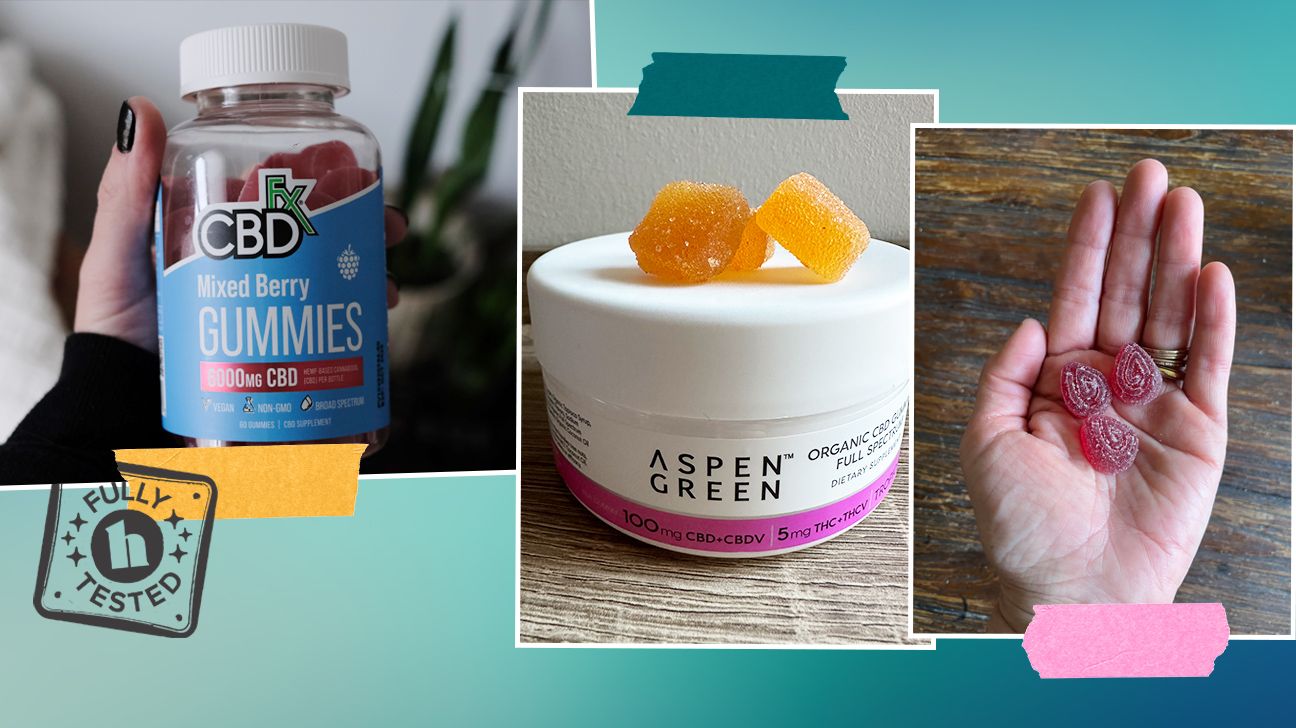
- Best overall gummy for anxiety: CBDfx Mixed Berry CBD Gummies | Skip to review
- Best for unwinding before bed: NuLeaf Naturals CBD Gummies | Skip to review
- Strongest CBD gummy for anxiety: Aspen Green Bliss Organic Gummies | Skip to review
- Best for work-day stress: Medterra Max Relief CBD Gummies | Skip to review
- Best overall oil for anxiety: Lazarus Naturals Full Spectrum CBD Tincture | Skip to review
- Strongest CBD oil for anxiety: Aspen Green Organic Full Spectrum CBD Oil, Extra Strength | Skip to review
- Best for beginners: Medterra Daily Relief CBD Oil | Skip to review
- Best THC-free oil for anxiety: CBDistillery ahhh distilled THC-Free CBD Oil, 1,000 mg | Skip to review
*You’ll see mentions of COA below. A Certificate of Analysis (COA) is typically provided by a third party to confirm the contents, potency, and overall safety of a CBD product.
Many people claim that cannabidiol (CBD) helps them manage their anxiety. In recent years, CBD has been widely studied for its potential benefits to help with numerous conditions, including anxiety, chronic pain, and insomnia.
With numerous CBD products available, selecting one can be challenging. One thing to consider is the entourage effect, which is the theory that all the compounds in cannabis work in harmony and that when taken together, they produce a more complete effect than when taken alone.
Overwhelmed? All of the CBD oils and CBD gummies on our list have been rigorously vetted and tested by Healthline staff, who chose the products below as their favorites.
Disclaimer: Although some of the oils we tested were provided by manufacturers for free, our opinions are our own. They have not been reviewed, approved, or otherwise endorsed by the manufacturers.
• taste takes some getting used to
• bitter aftertaste
• good taste and texture
• relieves muscle tension
• best for beginners
• great for daytime dosing
We selected these CBD gummies and oils for anxiety based on criteria we think are good indicators of safety, quality, and transparency.
As a part of our vetting process, we consider:
- the product’s composition, ingredients, and overall quality
- any third-party certifications
- the company’s reputation and business practices
- any lab test results
- marketing claims
Read more about how we vet products and brands.
Additionally, the CBD gummies and oils on our list have been tested by Healthline staff. Our testers evaluated the products for their effects on anxiety. All feedback is based on their own subjective experiences.
Our Medical Standards and Insights team has carefully researched and vetted over 11,000 products and services. We fact-check health claims, evaluate ingredients, and look into each brand’s reputation before sharing products and services on Healthline.
To choose the brands on this page, we considered all the CBD brands that passed our vetting process. Then, we personally tested some of them to narrow down our list even further. Read more about how we test CBD products.
Research on CBD and its use for anxiety is ongoing. Large-scale clinical trials are needed to determine effective doses for specific conditions.
However, a 2020 review of existing studies concludes that CBD has potential for treating anxiety disorders such as:
- post-traumatic stress disorder
- generalized anxiety disorder
- social anxiety disorder
A
However, a small
Still, other research shows that CBD may have a positive effect on symptoms related to anxiety. Here are a few potential ways that the best CBD for anxiety can help:
- Improved sleep: Some individuals with anxiety may have difficulty falling or staying asleep. A
2023 systematic review suggested that CBD, either alone or paired with tetrahydrocannabinol (THC), may improve insomnia and sleep. Plus, a different2023 systematic review explored how CBD may reduce nightmares, which can also be linked with anxiety. - Improved focus: If you have anxiety, you may find it hard to focus on the tasks at hand. A
2023 systematic review found that CBD may improve cognitive processing, encompassing mental capabilities such as memory, focus, and logical thinking. However, these findings were based on animal studies. - Improved physical symptoms: Anxiety can be linked with a range of physical symptoms. Early studies explored how CBD may improve anxiety-related symptoms like
digestion andpain .
These studies emphasize that current evidence isn’t conclusive and that more research is needed to learn more about how CBD may affect health and well-being, including anxiety. If you have any questions about anxiety or anxiety treatment, it’s best to talk with a healthcare professional for personalized advice.
Medical PerspectiveCBD can be a reasonable option for anxiety when used cautiously, starting at low doses. The biggest risks come from inconsistent dosing and using unverified products.
— Alex Nguyen, PharmaD, RPh, CPh
Learn how to shop for CBD here.
Quotes represent the opinions of our medical experts. All content is strictly informational and should not be considered medical advice.
Pros
- Evidence suggests that CBD may help manage anxiety.
- It’s generally easy to use.
- CBD can help alleviate physical pain associated with anxiety.
- You can adjust your dose easily with CBD oil, although you should never exceed recommended amounts.
Cons
- Only one CBD product is approved by the Food and Drug Administration (FDA) to treat anxiety.
- Some CBD products contain THC, which can increase anxiety.
- Since products are not FDA-regulated, dosage varies among products.
- Everyone reacts differently to CBD, so it may be more effective for some than others.
The studies referenced in this article used dosages of 0.5 to 800 mg of CBD per day.
Because of this wide range, and because CBD is not regulated by the FDA, it’s best to follow the recommended CBD dosage of the product you’re using. This often ranges from 20 to 50 mg per day.
If you’re new to CBD, consider starting with a smaller dose. Then, if you need to, you can gradually increase the dose. Do not exceed the recommended dosage without first talking with a doctor or healthcare professional.
Typically, CBD oil labeling instructs you to place the desired amount of CBD oil under your tongue and keep it there for 20 seconds to a few minutes before swallowing. To keep your oil dropper clean, avoid touching it with your hands or mouth.
It’s not completely clear how long CBD takes to work. Some people may experience the immediate effects of the oil, such as sleepiness, within 30 to 90 minutes. You may notice longer-term effects, like reduced anxiety, after several weeks.
You’ve got a lot of options when it comes to choosing the best CBD for anxiety. Here are a few factors to consider:
- Look for a product that has been third-party tested: Reputable CBD companies send their products to accredited third-party laboratories to testing. Then, they make the testing results available to the public through COAs.
- Compare the COA with the product label to ensure the CBD and THC content match. Additionally, verify that it doesn’t contain dangerous levels of contaminants, such as molds, pesticides, and heavy metals.
- Consider your personal preferences and needs: If anxiety keeps you up at night, a CBD product that contains calming ingredients might be helpful. But if your anxiety is more prevalent during daytime hours, you might prefer a low-potency CBD you can take on the go, upping your dose as needed.
- Think about CBD type: Keep in mind that if you’re hoping for an
entourage effect , you’ll want a full-spectrum product. A broad-spectrum option will offer other cannabis plant benefits but won’t include any THC. A CBD isolate product will contain no THC and no other cannabinoids or plant compounds. So, if exposure to anything but CBD is a concern, opt for an isolate. - Don’t forget about taste: If the smell or taste of cannabis is a turnoff, you may prefer a flavored product to mask any overt earthiness.
Before trying CBD drops for anxiety, talk with a healthcare professional or a knowledgeable cannabis clinician, especially if you’re taking any medications. CBD may interact with certain prescription medications, over-the-counter drugs, and vitamins or supplements.
CBD may also cause liver toxicity or injury, according to a 2019 study. However, this study was conducted on mice, and researchers say you would need to be taking extremely high doses for this to be a concern.
In addition, use caution when consuming CBD along with high fat meals. Fats can increase CBD blood concentrations, increasing the risk of side effects, according to a
There’s currently a lack of clinical trials on using CBD for anxiety, so there’s no consensus on the correct dosage or how long it takes for CBD to start working.
However, in an older 2018 study on using CBD for social anxiety that included 57 male participants, researchers gave participants either 150 mg of CBD, 300 mg of CBD, 600 mg of CBD, or placebo before undergoing a simulated public speaking test.
Researchers concluded that 300 mg of CBD administered orally 90 minutes before the test significantly reduced the participants’ anxiety.
Panic disorder is a form of anxiety. A recent animal study suggests that cannabidiol, an active ingredient of CBD gummies, may help reduce fear-related responses by supporting the brain’s ability to unlearn fear and prevent it from coming back.
However, more studies are needed to determine whether CBD, and specifically CBD gummies, can help with panic disorder.
CBD gummies are unlikely to provide immediate anxiety relief. If any effects occur, they are most likely to be felt within 2.5 hours after consumption.
The best CBD oil for you simply comes down to personal preference.
The most important things to consider when choosing a CBD product are the safety and transparency aspects.
Always ensure the brand you choose makes the COAs for its products available, provides clear dosing information, and clearly lists ingredients.
With CBD oils and tinctures, use the included dropper to measure your desired dose, and then squeeze the drops under the tongue. Hold the liquid there for about 20 seconds before swallowing.
The serving size is usually the size of the dropper. A 1-oz (30-mL) bottle with 1,200 mg of CBD will deliver 30 servings of 40 mg per mL.
But that doesn’t mean you have to take a full dropper or stick to just one dropper. If you’re new to CBD, start with a smaller dose to see how it affects you before trying more.
Researchers are still studying how CBD might help ease anxiety and depression. If you’ve been considering trying CBD oil to see whether it makes you feel more relaxed in times of stress or in your day-to-day, we hope our list of fully vetted recommendations helps you choose the best CBD oil that fits your needs.
When considering the use of any CBD product, be sure to talk with a healthcare professional first, especially if you’re taking any medications or supplements.
Healthline has sole editorial control over this article. Potential uses for the products listed here are not health claims made by the manufacturers. The information in this article is intended to be general in nature. It’s not intended to be a substitute for medical advice from a healthcare professional. Healthline encourages you to make any treatment decisions with your healthcare professional.
Is CBD legal? The 2018 Farm Bill removed hemp from the legal definition of marijuana in the Controlled Substances Act. This made some hemp-derived CBD products with less than 0.3% THC legal at the federal level. However, CBD products containing more than 0.3% THC still fall under the legal definition of marijuana, making them illegal at the federal level. Some states have legalized CBD, so be sure to check state laws, especially when traveling. Also, keep in mind that the FDA has not approved nonprescription CBD products, and some products may be inaccurately labeled.